
Last updated November 18, 2026








Free written scope consultation - allowances, timeline, and change-order rules on paper before a single trade is scheduled
Seasonal Construction Care for Santa Clara: Year-Round Homeowner’s Guide
Santa Clara averages roughly 300 days of sun a year, and that is precisely the problem. A climate this forgiving talks homeowners into skipping the maintenance they’d never skip in a harder part of the country. No snow load to remind you the roof needs a look. No deep freeze to force a plumbing check. So the seasons pass, and UV degradation, thermal cycling, and two concentrated wet seasons quietly do their work on siding, shingles, flatwork, and wood. By the time the damage announces itself, a maintenance call has become a repair bill. This guide lays out a month-by-month calendar built around Santa Clara’s actual weather, explains why the fall window matters most, and shows you how to log it all so future claims go smoothly.
Quick Answer
Seasonal construction care in Santa Clara revolves around two wet seasons (roughly November through March and a lighter late-spring push) separated by a long, dry, high-UV summer. The highest-leverage window for exterior work is October through early November, before the first soaking rains, when roofs, gutters, fences, and flatwork can be inspected and sealed while they’re dry. Summer heat then becomes the stress test, and spring is when you catch what winter loosened.
Styles & brands we work with
- Kitchen remodeling
- Bathroom remodeling
- Home additions & ADU
- Roofing
- Windows & doors
- Driveway & pavers
- Fence
Table of Contents
- Why Santa Clara’s Mild Climate Hides Damage
- The Santa Clara Month-by-Month Maintenance Calendar
- Why October and November Are the Highest-Leverage Weeks of the Year
- How Summer Heat Affects Roofing, Decks, and Concrete Here
- The Cascade Effect: What Skipped Spring Becomes by Winter
- Santa Clara Microclimates and What They Mean for Your Home
- Building a Home Maintenance Log That Actually Holds Up
- The Annual Inspection Checklist, Step by Step
Why Santa Clara’s Mild Climate Hides Damage
Santa Clara sits in a valley that warms earlier and dries out faster than the fog belt to the west, and that pattern shapes how a house ages. Morning marine influence burns off by mid-morning most of the year, then the sun does its work. The result is a climate that feels gentle but delivers serious cumulative exposure: strong ultraviolet light for most of the year, wide day-to-night temperature swings, and dust that settles into every seam and gutter before the rains arrive.
Thermal cycling is the quiet culprit. Materials expand in the afternoon heat and contract overnight, thousands of times a year. Caulk joints at window frames, flashing seams on the roof, and the control joints in a concrete driveway all flex through that cycle. A hairline crack that opens in August lets water in during the first December storm, and that water freezes on a cold January night at the edge of the valley floor. One season of that and a $200 reseal becomes a reconstruction.
Add two concentrated wet periods and you have a maintenance rhythm most homeowners never learn because nothing dramatic forces them to. The off-white staining on stucco below a window, the slight curl at a fence board’s edge, the fine spiderweb cracking on the driveway apron: all of these are readable early warnings if you know when to look. The trick is to look on a schedule rather than when something fails.
What a Santa Clara house actually needs is a small, predictable set of tasks timed to the weather. Not a marathon weekend every spring, but four checkpoints a year where you spend an afternoon confirming that the envelope of the building is still doing its job. That’s the whole idea behind seasonal care here.
The Santa Clara Month-by-Month Maintenance Calendar
National maintenance templates are built for places with hard winters. Santa Clara needs its own calendar, keyed to the dry summer, the fall transition, and the two wet pushes. Here’s the version we’d hand a homeowner moving in this month.
January through March: The Wet-Season Watch
- January: Walk the perimeter after the first real storm and note where water pools against the foundation. Check the attic for any staining from wind-driven rain.
- February: Confirm that downspouts still carry water away from the house. Look at fence posts for leaning or rot at the ground line.
- March: Inspect window and door weatherstripping; winter wind loads are what tend to spring the seals.
April through June: Spring Catch-Up and Dry-Season Prep
- April: The wet season ends: now check roofing shingles, flashing, and the fascia board for loosening or lifted edges.
- May: Reseal exterior wood and touch up paint on trim before the sun gets intense. This is the best month for a driveway and paver review, since the ground is still moist but the surface dries fast.
- June: Prune anything touching the roofline or fence, and clean out gutters of pollen and seed debris ahead of summer.
July through September: Heat-Season Protection
- July: Check deck boards and handrails during the hottest stretch, since this is when expansion stress shows up.
- August: Look at concrete flatwork for new cracks and at roofing shingles for granule loss or curling.
- September: Inspect window seals and caulk joints; this is also a good time to recheck attic ventilation and any roof vents.
October through December: The High-Leverage Window
- October: Full exterior walkthrough. Everything that needs sealing, patching, or replacing should be scheduled now.
- November: Get roofing, fence, gutter, and flatwork work completed before the rainy season starts. Also confirm drainage paths.
- December: Interior and thermal review: check window and door fit, look at any attic moisture, and plan kitchen or bath upgrades for the slower months.
Four checkpoints, each under two hours if nothing’s wrong. Note the year and month for each task in your maintenance log (we cover that below). A Santa Clara home that goes through this cycle once has almost nothing left to discover.
Why October and November Are the Highest-Leverage Weeks of the Year
Ask any roofer, paver crew, or fence installer which weeks they’d protect on a calendar, and most will say the same thing: the window right before the wet season. That’s when everything is dry enough to work, dry enough to seal properly, and dry enough to reveal what needs attention. That window sits roughly between the first week of October and the middle of November in Santa Clara.
What makes it high-leverage is simple physics. Roofing materials seal, caulk cures, and paint adheres when the substrate is dry. A shingle patch applied in October has weeks of airtime to bond before rain pushes against it. A fence board sealed in October has absorbed its cycle of summer expansion and is ready to lock down for the wet season. A paver joint sanded and stabilized before the rains drains better all winter and shifts less.
The other half of the leverage is diagnostic. The dry season has just pushed everything to its maximum expansion. That means cracks, popped fasteners, lifted shingles, and shifting joints are at their most visible in October. You’re inspecting a house at peak stress, which is exactly when a problem announces itself. A roofline that looks fine in March can look like a puzzle in October, and you’ll see every piece.
The Tasks That Belong in This Window
- Roof inspection and small repairs. Replace lifted or missing shingles, reseal pipe boots and vent flashing, and clear the valleys of debris. Roof work at height is a real safety concern; for anything beyond close visual inspection, bring in a trained contractor.
- Gutter and downspout clearing. Remove the summer accumulation of leaf litter and seed debris so the first rains run off cleanly.
- Exterior caulking and paint touch-up. Focus on joints at windows, doors, and siding.
- Fence post and board review. Check ground-line rot, wobbling rails, and gate sag. Tighten and replace now, not after wind loads hit.
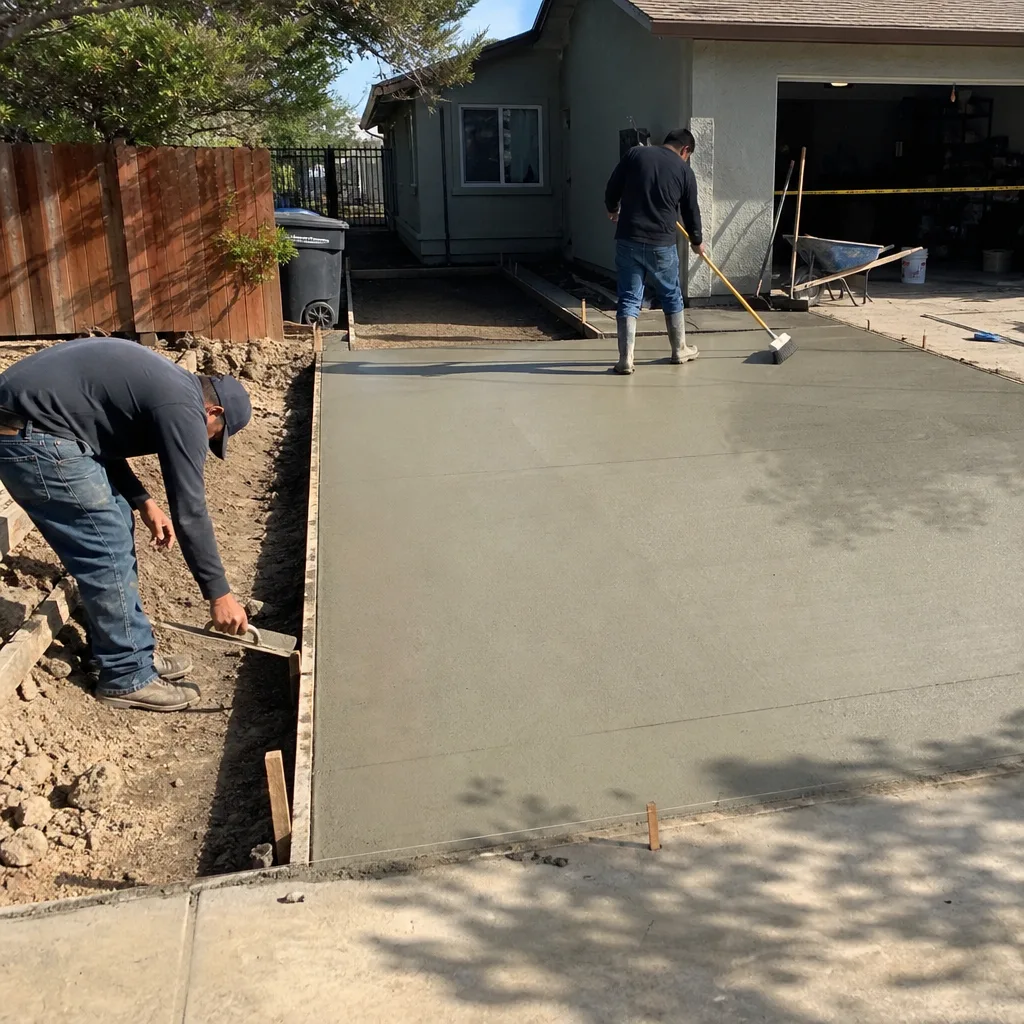
- Driveway and paver inspection. Relevel, re-set loose pavers, re-sand joints, and seal concrete ahead of wet-season freeze-thaw stress at the valley edges.
- Drainage check. Confirm that water drains away from the foundation and gutters point away from the walls.
If you only do one thing this year, do this window. Almost every exterior service we talk about with a Santa Clara homeowner flows through it.
How Summer Heat Affects Roofing, Decks, and Concrete Here
Summer in Santa Clara valley is enough to make materials do things they wouldn’t do in San Francisco’s fog belt or out in the hotter inland reaches. It’s a middle case: warm enough to stress wood and asphalt, dry enough to keep the concrete curing quickly, and bright enough for UV to do a year’s worth of damage in a few months. That middle case has real implications for three material families.
Roofing Materials
Asphalt shingles lose their protective granules faster in high-UV, dry environments than in cooler, damper ones, and Santa Clara sun is relentless between May and September. That means a GAF, CertainTeed, or Owens Corning asphalt roof will show granular loss and slight curling earlier than the same material in a cooler Bay Area microclimate. The practical takeaway is to inspect right after the hottest stretch (late August into September), not just in fall. Since we work with all three major shingle manufacturers, we can match a repair shingle to the existing roof age and color profile rather than push a full replacement that isn’t needed yet.
Deck Boards and Wood Siding
Wood expands in the heat of the day and contracts at night, and in a low-humidity valley it also dries out through the summer. Engineered siding options like James Hardie fiber cement hold up better than raw wood under that cycle, but any wood in the sun still needs periodic sealing. Look for popped nails, splintering at handrails, and gaps opening at board seams. Catching this in September means one repair job; discovering it in February means a rebuild section. This is the logic behind choosing materials with documented weather ratings for any exterior work here.
Concrete Flatwork and Pavers
Concrete in Santa Clara cures very quickly under summer sun, and quick curing is exactly when fine surface cracks appear. That’s why the season matters for new pours and for reading existing ones. Pavers behave differently: the joints are the wear point, and dry summer heat pulls out joint sand while pavers themselves shift slightly under thermal expansion. A paver driveway in Santa Clara typically needs its joint sand refreshed every couple of years, and a concrete driveway fares better with a sealed surface. The products matter, too; brands like Belgard, Unilock, and Techo-Bloc make interlocking systems with documented load ratings, so a paver driveway can handle daily traffic and still drain.
None of this is exotic. It’s just what a house does in a valley that jumps from cool mornings to warm afternoons almost every day of the summer. Reading it correctly is the whole skill.
The Cascade Effect: What Skipped Spring Becomes by Winter
Deferred maintenance costs more than maintained maintenance, and nowhere is that clearer than in a cascade. One missed task creates the conditions for the next failure. Here’s how the chain usually runs in Santa Clara, in general terms, so you can recognize it on your own house.
- Missed gutter clearing in spring means water backs up under the roof edge in fall, which saturates the fascia board, which opens a path to the attic. The maintenance task is a few hours; the cascade is a roofing and interior repair.
- Skipped caulk inspection in summer means a hairline gap at a window frame admits wind-driven rain in December, which causes interior drywall staining, which may mean patching and painting inside before the exterior is even addressed.
- Unaddressed fence post rot in fall means a storm leans a section, which pulls the rails at their fasteners, which turns a post-and-board replacement into a full run rebuild.
- Ignored concrete cracking in August means water seeps into the crack through winter, freezes on cold nights at the valley edges, and widens the crack into spalling by spring.
- Deferred attic moisture check in winter means insulation batting is wet by March, which forces replacement alongside any roof repair.
The pattern here is that the maintenance task and the cascade task are in the same physical system, so the second one is always inside the first one’s consequence. Restoring a fascia board means getting the roof area right, the gutter path right, and the attic dry all at once. When we take on a residential project, we’d rather see the whole envelope than one isolated symptom, which is why our service scope runs from the driveway to the kitchen. One contractor, every phase of the project.
Concrete cascade costs vary widely by job, and the only honest number is the one in a written line-item estimate. But the direction is always the same: the longer the cascade runs, the more of the building it touches.
Santa Clara Microclimates and What They Mean for Your Home
Santa Clara isn’t one climate; it’s a handful of them stacked together. A home off El Camino near Santa Clara University sees a different exposure pattern from one backing onto the open space toward the San Tomas Aquino creek corridor, and both differ from a house tucked up against the hills near the city’s western edge. The differences are subtle but they change what maintenance looks like.
Homes near the university and the older downtown blocks tend to sit on mature tree canopies, which means gutter debris loads are heavier and roof shading produces more moss and algae staining. Homes on the valley floor toward the Santa Clara Convention Center and the northern neighborhoods see more wind exposure across open ground, which loads fences and roofing edges and drives rain harder against west-facing walls. And newer developments around the stadium and the transit corridors often use tight modern envelopes and engineered materials that age differently: less wood to check, but more reliance on window and door seals and on the drainage performance of flatwork.
The upshot is that a generic checklist only gets you halfway. The specific maintenance priorities for your Santa Clara home depend on orientation, tree cover, material family, and how open the surrounding ground is. That’s why a walkthrough that actually examines your house beats any national template.
Home additions and new construction here should also be planned with these microclimates in mind. If you’re adding square footage or a prefab unit in the backyard, the siting and the envelope matter as much as the interior layout. We work with prefab and modular partners like Plant Prefab and Tuff Shed alongside site-built additions, so a Santa Clara homeowner can choose the pathway that fits the lot and the exposure. ADU-ready doesn’t mean one method; it means all of them on the table.
This is where home additions & ADU work and seasonal maintenance overlap: a well-sited addition with proper drainage and a durable envelope is easier to maintain from day one. Getting the detailing right at build time saves years of catch-up.
Building a Home Maintenance Log That Actually Holds Up
A maintenance log isn’t a chore; it’s documentation that pays off when you sell, when you file a claim, and when you need to prove the condition of your home at a specific point in time. Insurance adjusters and warranty administrators care about dates, observations, and actions. Here’s a system that holds up.
- Use one document. A notebook, a spreadsheet, or a shared folder is fine, as long as everything lives in one place. Don’t scatter notes.
- Log the date and the observation. Not “roof looks fine,” but “Oct 14, 2026, dry, checked shingles from ladder at south elevation, no lifting, one loose vent boot, resealed.”
- Photograph everything at each checkpoint. Wide shot and close shot of each area. Photos taken on a schedule read like a medical chart, and that’s exactly what you want.
- Record materials and brands. When a contractor specifies a product, log the manufacturer and product line. This matters enormously if a warranty claim ever comes up, and it makes future repairs much easier.
- Log contractor visits and paperwork. Keep the estimate, the invoice, the permit if one was pulled, and the observation that triggered the visit.
- Review the log once a year. A 20-minute annual read can reveal a pattern: same corner of the roof, same window, same fence panel. Patterns are diagnostic.
Santa Clara insurance claims often turn on whether a homeowner can show that a pre-existing condition was or wasn’t visible before an event. A log with dated photos and notes is the most persuasive tool you have. That’s one reason we recommend every free estimate meeting include a walkthrough that generates a written record of the current condition. The written estimate sets the final price; the written condition report protects you later.
Window and Door Seals in the Log
Window and door seals deserve their own log line because they fail quietly. Modern seal systems, whether on Therma-Tru entry doors or on impact-rated window lines, wear differently depending on sun exposure and orientation. Log their condition each September so you can catch a failing seal before rain gets behind it. When it’s time to replace rather than repair, having a known material history makes matching and upgrading much simpler.
The Annual Inspection Checklist, Step by Step
Here’s the version we’d put on a clipboard for a Santa Clara home. Work top to bottom, exterior to interior, and never climb anything you don’t feel steady on. Roof and height checks are a safety matter; for anything above a step ladder, hand the inspection to a trained professional.
- Roof (visual, from ground or window). Look for lifted, curled, or missing shingles, dark staining, or debris piles in valleys. Note any granules collecting in gutters.
- Gutters and downspouts. Confirm they’re clear and that downspouts drain away from the foundation.
- Fascia and trim. Check for soft spots, peeling paint, and gaps at joints.
- Exterior walls. Scan for cracks, staining, and popped caulk at windows, doors, and penetrations.
- Windows and doors. Confirm they close smoothly, seals are intact, and weatherstripping isn’t compressed.
- Fence. Test post stability, check for ground-line rot, and confirm gates swing cleanly.
- Driveway and flatwork. Note new cracks, settling, and paver joint condition.
- Drainage and grading. Make sure soil slopes away from the house.
- Attic. Look for staining, moisture, and ventilation issues.
- Interior envelope. Check ceiling and wall stains near windows and roof lines.
Do this once in October and once in April and you’ll see every issue while it’s still small. If you’d like a second set of eyes during the October pass, call us. The estimates are free and the walkthrough comes with a written record.
Common Mistakes to Avoid
- Treating the dry season as maintenance season. Summer looks like a break; it’s actually when the most damage accumulates, because UV and heat are doing their quiet work. Inspect in October, not just in spring.
- Waiting until the first storm to book a roofer or paver crew. Santa Clara’s rainy season doesn’t announce itself weeks ahead, and the highest-leverage window closes when it starts. Book October.
- Skipping the walkthrough and just fixing the symptom. A water stain on a ceiling is the end of a cascade, not the start. Fix the whole system.
- Not documenting anything. No dates, no photos, no material records. When an insurance claim comes up, the log is your best evidence.
- Assuming “mild climate” means “low maintenance.” A Santa Clara home needs a schedule, not a lighter workload.
- Mismatching materials on a repair. A repair shingle from the wrong product line, or a paver from the wrong manufacturer, never blends and can weaken the surrounding system.
- Using a national maintenance template. Checkpoints written for a place with four seasons miss the two-wet-season rhythm that actually governs Santa Clara exteriors.
- Doing roof and height work without training. It’s the single most common serious-injury call we see. Leave it to a trained professional.
The roof and height caution carries real weight. Roofing materials and heights are not a do-it-yourself line item. A fall risk is not worth a patched seam. Have a professional take the roof-level inspection.
See the difference
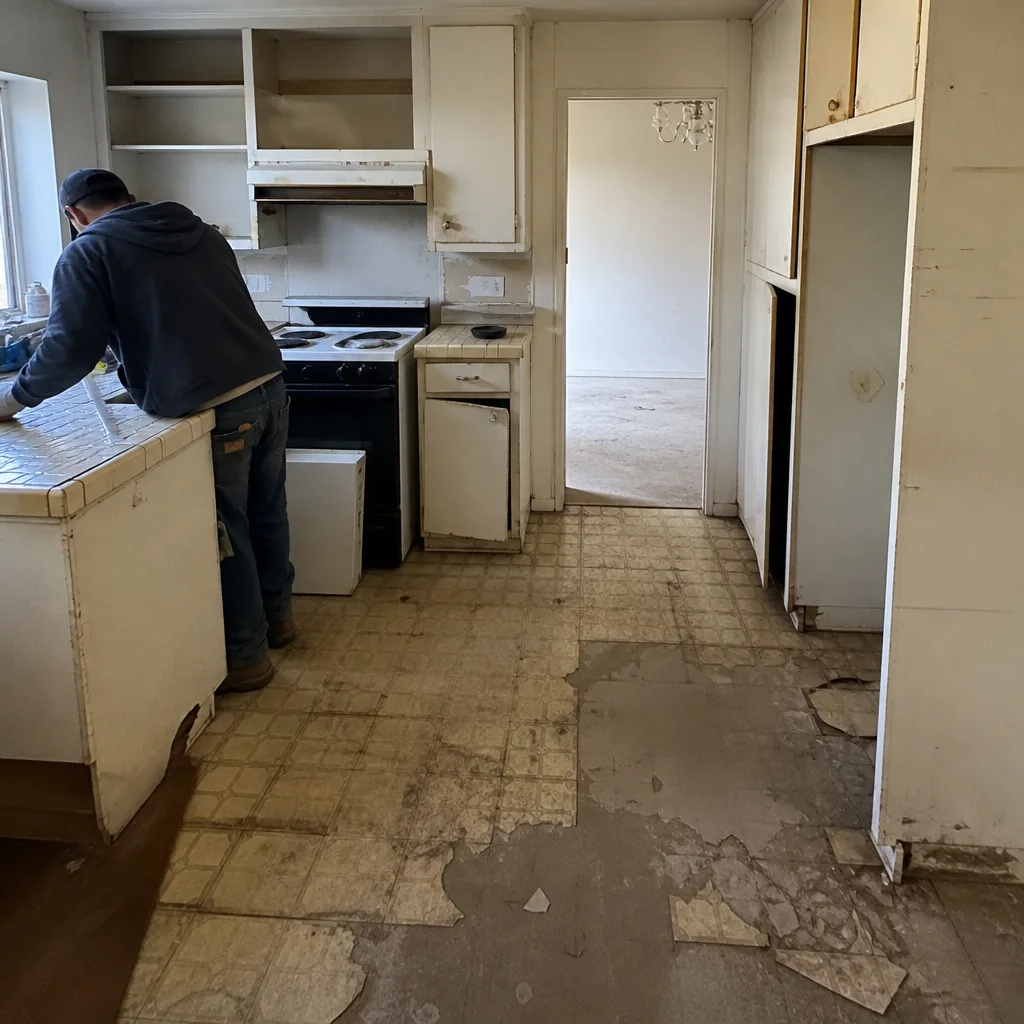 Before
 After
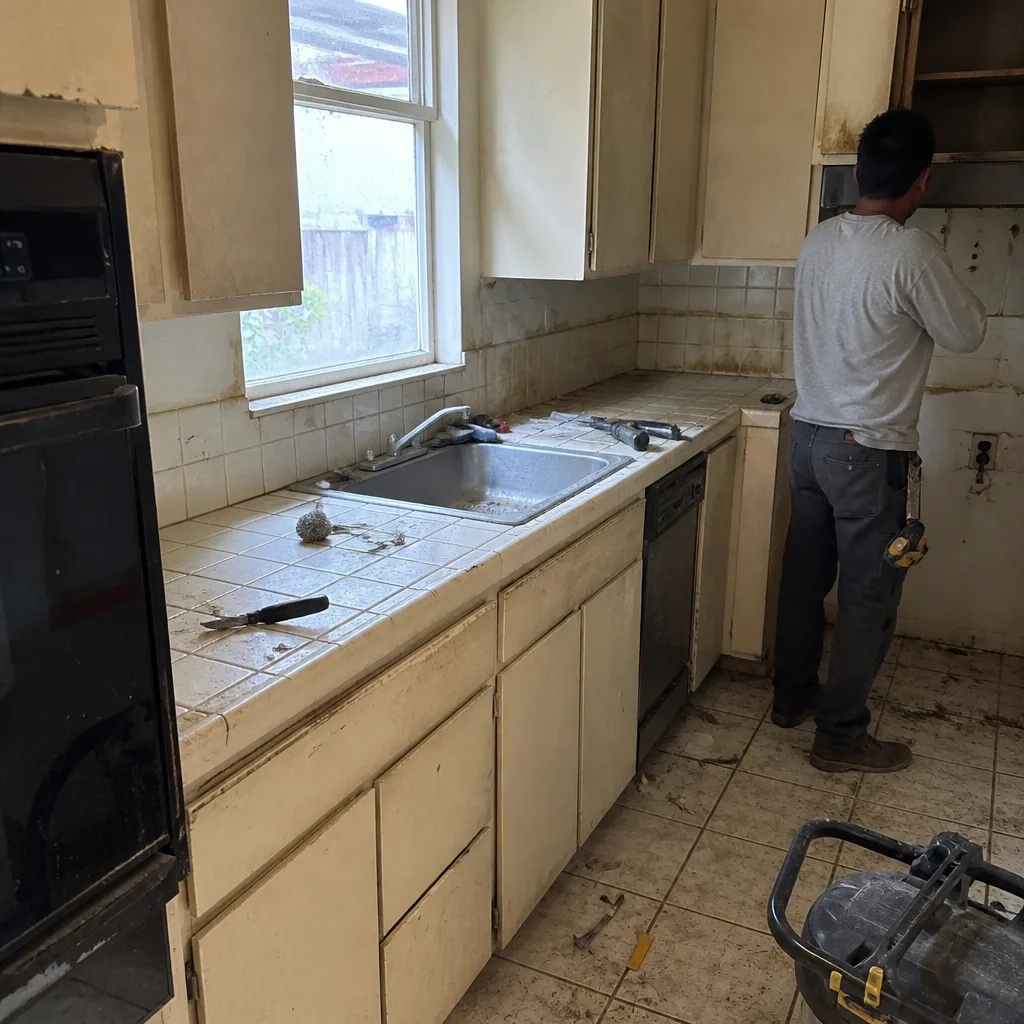 Before
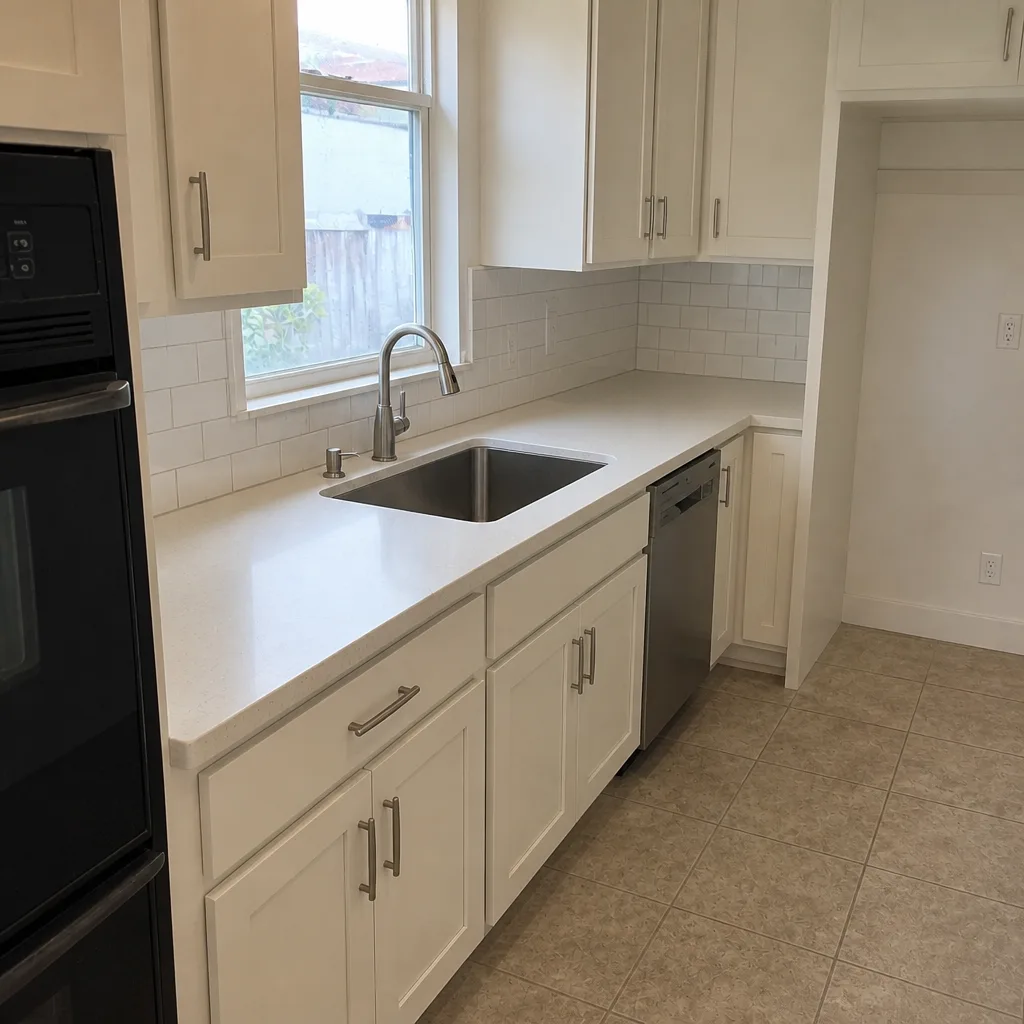 After
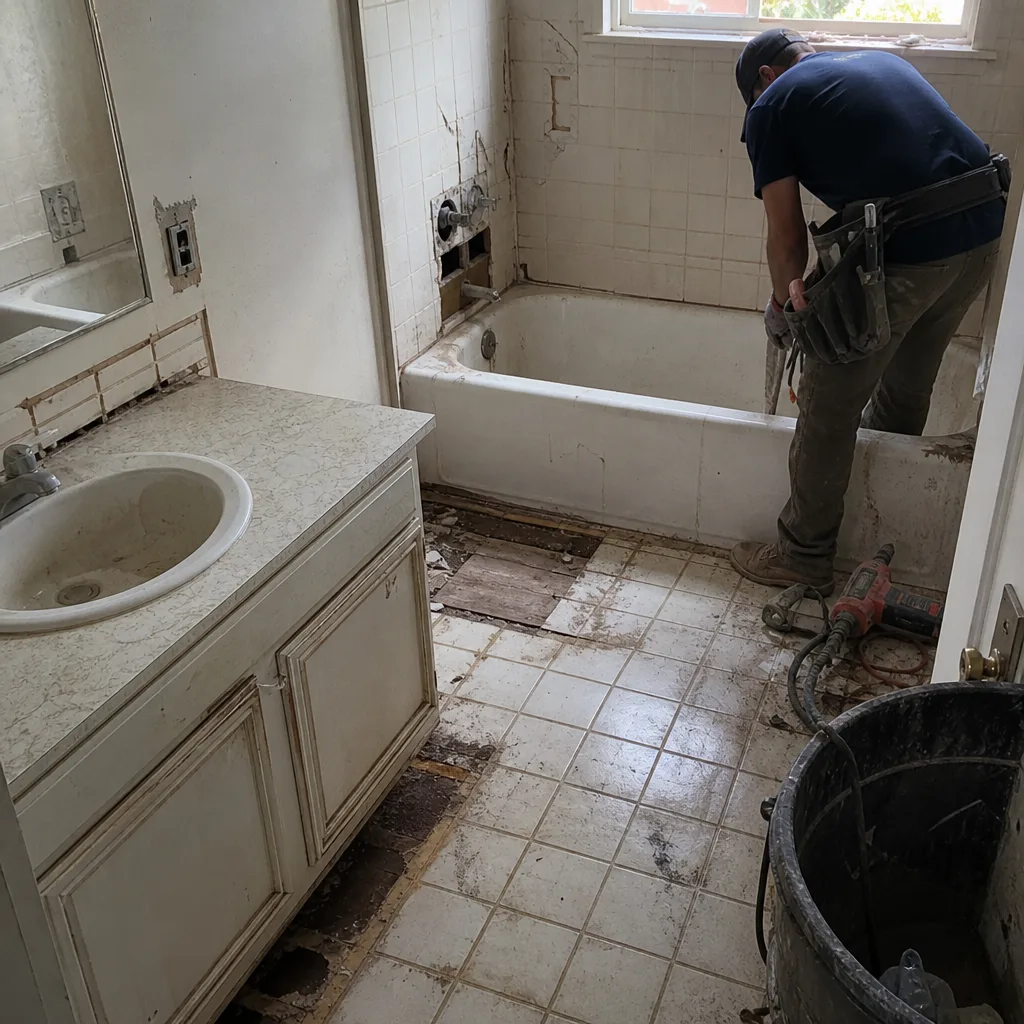 Before
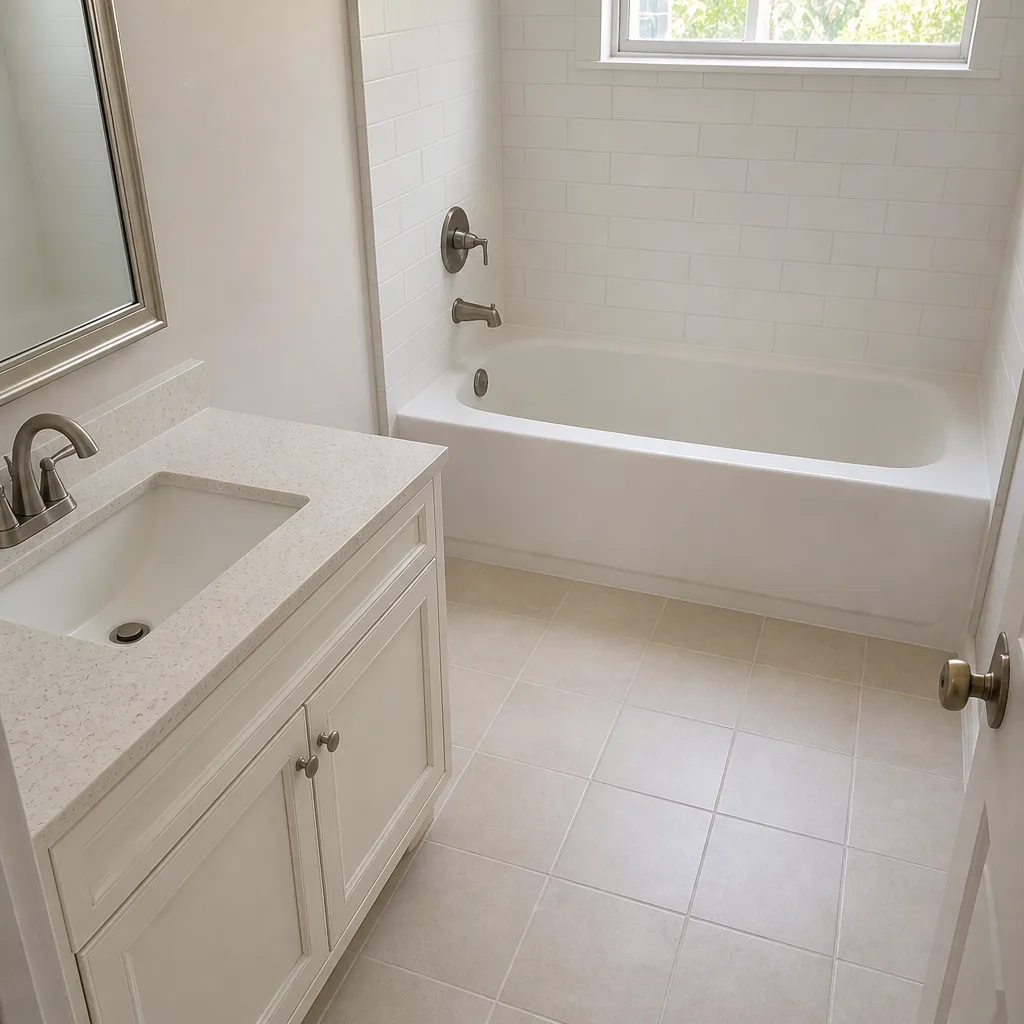 After
When to Call a Professional
Not every maintenance task needs a contractor. Cleaning gutters, caulking a window frame, and checking the log are homeowner jobs. The line is clearer than most people think.
Call a professional when a task involves height (any roof-level inspection or repair), structural systems (missing shingles, soft fascia, or a fence section that leans under load), any system with a documented load or weather rating, or anything a permit protects. Permits are the other trigger. Most Santa Clara exterior and structural work requires a permit from the city’s building department; ask before assuming otherwise. A professional who pulls permits and passes inspections is a professional you can hold accountable later. If your task involves fencing that needs to be replaced or a driveway that needs to be re-set, the fence installation and driveway & pavers guides cover scope and material choices. For a coordinated exterior upgrade that spans multiple systems, it’s simplest to have one contractor manage the whole scope. That’s what we do. Construction Santa Clara offers free estimates in Santa Clara. Call (844) 435-8936.
If you’re planning an interior upgrade during the slower months, Construction Santa Clara handles that as part of the same full-home scope. Nothing gets lost in the handoff between trades.
Frequently Asked Questions

Clearing gutters and inspecting the roofline in October, before the wet season. A Santa Clara home’s biggest risk is water getting in where it wasn’t draining, and the October window is when it’s dry enough to see and fix the problem. Call (844) 435-8936 if you want a professional pass with you; estimates are free.
Every couple of years is typical for exposed wood in Santa Clara’s sun, and sometimes every year for a south- or west-facing surface. High UV degrades the sealant faster than cooler climates. It’s cheaper to reseal than to reboard. Call (844) 435-8936 to schedule a walkthrough; estimates are free.
Both take a beating, but in different ways. Santa Clara sun stresses asphalt shingles and concrete pours more than the rainy season does, while the wet months stress drainage paths and the ground-level systems. That’s why fall is a good time to inspect the whole exterior in one pass. Call (844) 435-8936 for a combined free estimate; estimates are free.
No, not with a written line-item estimate that sets the final price. We write down what’s included, state the materials and quantities, and the estimate is what it is. That’s a core part of how we work. Call (844) 435-8936 for a free estimate.
Yes, on any project that requires one. Most Santa Clara structural and major exterior work requires a permit from the city’s building department. We pull permits and pass inspections as part of a coordinated scope. Call (844) 435-8936 to talk through your project; estimates are free.
A full fall pass with small repairs is typically a few days of on-site work, depending on the size of the house and how many systems are involved. Larger projects like roof replacement or a fence run take longer and get scheduled accordingly. The written estimate includes the timeline. Call (844) 435-8936 for a free estimate.
The Bottom Line
Santa Clara’s climate is generous enough that homeowners forget it’s still working on their homes year-round. UV, thermal cycling, and two concentrated wet seasons do cumulative damage slowly and quietly. The fix is a simple four-checkpoint calendar built around the valley’s actual weather, an October walkthrough that puts you ahead of the wet season, careful material choices where documented weather ratings matter, and a maintenance log that documents condition over time for warranty and insurance purposes. None of it is complicated. All of it is cheaper than the cascade. If you’d like someone from Construction Santa Clara to walk your home with you this fall, that’s exactly what our free estimates are for.
Call (844) 435-8936. We answer 24/7. Fast dispatch from 7am to 7pm, Sunday through Friday. We’ll put a written line-item estimate and a condition report in your hands at no cost.
Written by the team at Construction Santa Clara.