
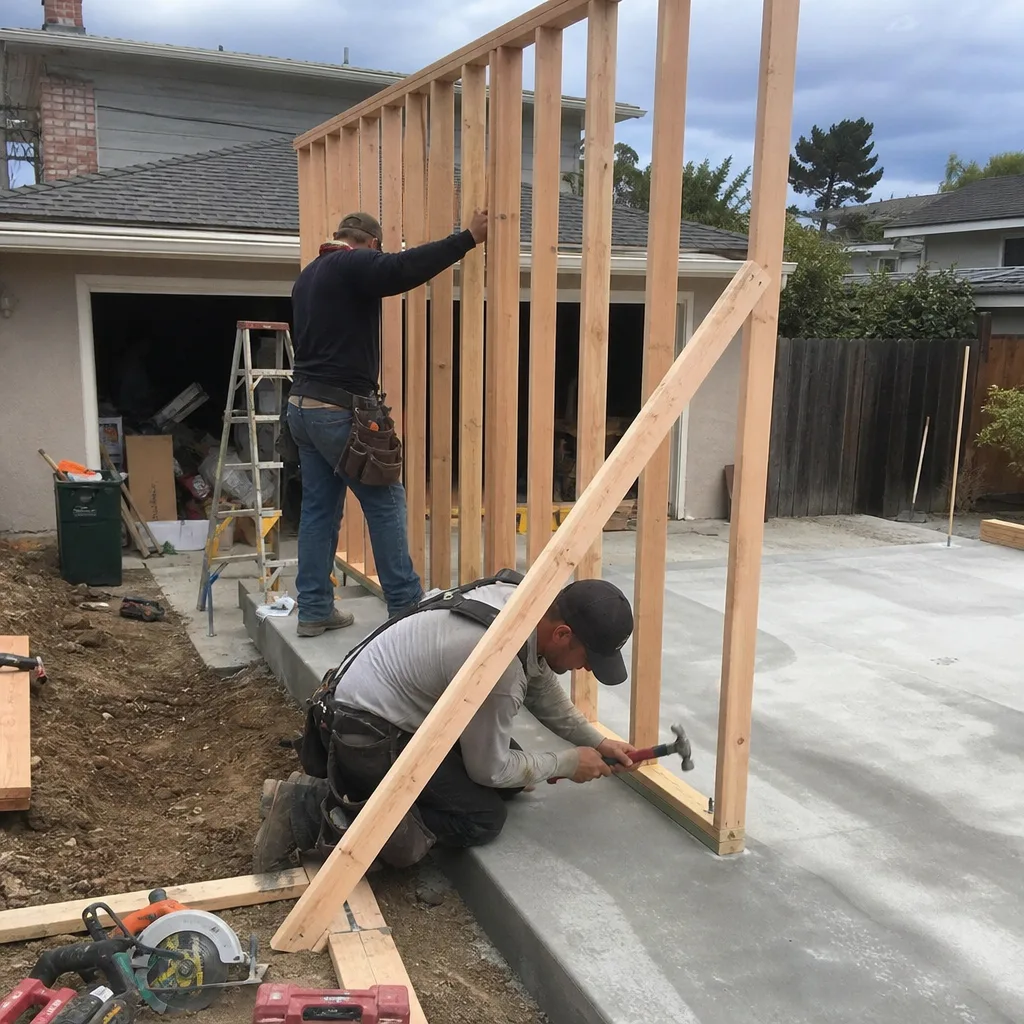
Last updated November 18, 2026








Free written scope consultation - allowances, timeline, and change-order rules on paper before a single trade is scheduled
How to Hire a Construction Contractor in Santa Clara: A Step-by-Step Guide
Checking a contractor’s CSLB license takes about 90 seconds. It also tells you almost nothing about whether that contractor will finish your project on time, pull the right permits, or still be reachable when something goes wrong six months later. A license number confirms one thing only: the contractor isn’t operating illegally. Everything that actually protects your money sits outside that 90-second check, in the contract clauses, the subcontractor list, and the permit paperwork nobody asks to see. This guide walks through the steps that do the protecting, in the order you should take them, with the questions that separate a contractor who runs a tight project from one who runs a loose one.
Quick Answer
To hire a construction contractor in Santa Clara, verify the contractor’s CSLB license classification matches the scope of work, confirm who is pulling the permits, get a written subcontractor and supplier list, insist on five specific contract clauses before you sign, and pay on completion milestones tied to inspections rather than calendar dates. The site visit matters more than the bid: a contractor who quotes a Santa Clara project without walking the property can’t know what the permit office or the existing structure will demand.
Styles & brands we work with
- Kitchen remodeling
- Bathroom remodeling
- Home additions & ADU
- Roofing
- Windows & doors
- Driveway & pavers
- Fence
Table of Contents
- Step 1: Verify the License Classification, Not Just the Number
- Step 2: Audit the Subcontractor Chain Before You Sign
- Step 3: Nail Down Permit Responsibility in Writing
- The Five Contract Clauses Santa Clara Homeowners Should Insist On
- How to Structure Payment Milestones Under California Rules
- Why the Site Visit Should Come Before the Bid
- Red Flags Specific to the Santa Clara Market
- What Changes When a Project Spans More Than One Trade
Step 1: Verify the License Classification, Not Just the Number
Every licensed contractor in California holds a license with a classification attached to it, and the classification is the part that matters. A number without a classification is a number without a meaning. Homeowners in Santa Clara routinely look up a license on the CSLB site, see “Active,” and consider the job done. That’s the equivalent of checking that a driver exists and assuming they can operate a forklift.
The classification system breaks down roughly like this:
- Class A covers general engineering work – roads, grading, large-scale earthwork. Rarely relevant to a residential Santa Clara remodel, though occasionally relevant on a major site.
- Class B is the general building contractor. A Class B license allows a contractor to take a project that involves more than two unrelated trades, and to subcontract out the specialty work.
- Class C licenses are specialty licenses, each tied to a narrow trade – roofing, plumbing, electrical, painting, and so on. A Class C contractor is limited to their trade (and sometimes closely related work).
Here’s the part most homeowners miss: a Class B contractor can legally take on a whole kitchen remodel or a home addition and bring in Class C subcontractors for the specialized phases. A Class C contractor typically cannot take on the whole project. If a roofer with a C-39 license quotes you a full kitchen remodel plus the roof, the quote is outside their license, and your recourse if things go wrong shrinks accordingly.
What to verify before signing:
- Confirm the license is active, not expired or suspended.
- Confirm the classification matches the scope you’re hiring for.
- Confirm the business name on the license matches the name on the contract.
- Ask who will actually hold the contract, then confirm that name is the licensed entity.
On a multi-trade project – say a bathroom remodel plus a new fence and a driveway replacement – you’re looking for a contractor whose license covers the full scope, or a contractor who is upfront that the project runs under their license with the specialty work subcontracted. Either arrangement can work. What doesn’t work is a contract where the licensing gets vague. Our technicians have up to 13 years of experience across the trades we cover, and one thing that experience teaches is that scope lives or dies on who’s legally responsible for each phase.
Step 2: Audit the Subcontractor Chain Before You Sign
Most construction projects of any size involve subcontractors. That’s normal. What matters is whether you know who they are, and whether the money you pay your contractor actually reaches them.
Here’s the mechanism that catches homeowners off guard: in California, a subcontractor or material supplier who isn’t paid for work on your property can file a mechanic’s lien against that property. The lien attaches to your home, not to the contractor’s business. You can pay your general contractor in full, in good faith, and still find a lien filed against your house because a subcontractor two levels down never got paid. This is why the subcontractor chain is not the contractor’s private business; it’s your title risk.
Before signing, ask for:
- The names and license numbers of every subcontractor expected on the job. On a full-scope project this could include roofing crew, hardscape crew, plumbing, electrical, and finish trades.
- Written confirmation that each subcontractor is licensed for their classification.
- A preliminary notice from each subcontractor, which is the document that protects your property by making the payment chain visible.
- A list of material suppliers for major items. On a project with cabinetry from KraftMaid or Wellborn, or a counter in Cambria quartz, the supplier of those materials can also have lien rights if the contractor doesn’t pay them.
You can also request lien waivers, sometimes called conditional release forms, at each payment milestone. These are signed statements from subcontractors and suppliers confirming they’ve been paid for work to date. Requiring them at each milestone is standard practice on well-run projects and protects you directly.
A contractor who balks at naming subcontractors, or who says “we’ll figure out the trades when we get there,” is telling you something important about how the project will be managed. The good ones hand over the list before you ask.
Step 3: Nail Down Permit Responsibility in Writing
Santa Clara projects that touch structure, plumbing, electrical, gas, or grading generally need permits from the city’s building department. The permit process isn’t a formality. It’s the mechanism that gets your work inspected, and it’s the mechanism that means your project will be built to code rather than to whatever the crew decided on that day.
Two phrases in the contract decide whether that happens correctly:
- “Contractor shall obtain all required permits.” The contractor pulls them under their license, schedules the inspections, and is responsible for passing them.
- “Owner to obtain permits” or a line item where the owner pays for permits separately.
The first phrasing is what you want on anything structural. The second can work on a purely cosmetic project, but on additions, ADU builds, roof replacement that involves structural repair, or anything involving gas or electrical, the permit belongs in the contractor’s name. It’s a marker that they intend to stand behind the work through inspection, and it makes the inspector a partner on your side of the table.
Ask one direct question: “Are you pulling the permit, and are you responsible for all inspections?” A contractor who answers yes without hesitation has done this before. A contractor who says the homeowner can “handle the paperwork” is handing you the liability for someone else’s work.
On additions and detached or attached ADU builds, the permit process is heavier – the plan check involves structural review, and the city will want to see a full plan set. If your contractor is offering a prefab or modular pathway through manufacturers like Abodu, Dvele, Mighty Buildings, Boxabl, or Plant Prefab, the permit still exists, and the question of who owns it still needs a written answer. Prefab doesn’t remove permitting; it changes the sequence. A contractor experienced with home additions & ADU projects will already know how that sequence runs.
The Five Contract Clauses Santa Clara Homeowners Should Insist On
Standard contractor agreements, including the CSLB-issued templates many contractors use, cover the basics. They rarely cover the five things that decide whether you sleep well through a three-month project. Insist on all five in writing:
- A named schedule with a start date and a substantial completion date. Not “approximately six weeks.” A calendar start date and a calendar completion date, with the understanding that significant changes require a written change order that resets both.
- A change order process with dollar thresholds. Any change beyond a stated dollar amount requires your written approval before work proceeds. No verbal adjustments, no “we’ll handle it at the end.”
- A subcontractor and supplier list attached as an exhibit. The list you gathered in Step 2 becomes part of the contract. If a subcontractor gets swapped out mid-project, you get notified in writing.
- Lien waiver delivery tied to payment. Every payment milestone triggers a set of signed lien waivers from the subcontractors and suppliers working under that phase. No waivers, no payment.
- A warranty on workmanship stated in years, with a written process for service calls. Roofs, remodels, and hardscape installations are guaranteed differently, and the warranty term should be spelled out. Ask specifically what happens if a roof leak appears in month fourteen and how a service call is scheduled.
If a contractor pushes back on any of these, that pushback is the answer. Well-run construction companies can accommodate all five without breaking stride, because these clauses describe how they already operate. A contractor who can’t produce lien waivers on demand or won’t commit to a calendar completion date is telling you what the next three months will feel like.
How to Structure Payment Milestones Under California Rules
California restricts how much a contractor can collect upfront on a home improvement contract, and the reason is simple: front-loaded payments leave you with no leverage. The general rule is that the down payment can’t exceed 10% of the contract price or $1,000, whichever is less, on most home improvement contracts. Beyond that, you pay on performance.
A sane milestone structure for a Santa Clara project looks like this:
- Deposit at signing: within the California cap. This covers mobilization and material ordering.
- Milestone 1, framed and rough-in inspected: payment released after the framing and rough mechanical, electrical, and plumbing inspections pass, with lien waivers delivered.
- Milestone 2, drywall and finishes underway: payment tied to a documented completion point, not a calendar date.
- Milestone 3, substantial completion and final inspection: payment released only after the final inspection passes and any punch list items are resolved.
- Retention: a small holdback released after a stated period post-completion, giving you a lever on small unfinished items.
Tie every milestone to a deliverable or an inspection, never to a calendar date. Calendar-based payments mean you pay for time that passed, not for work that was done. An inspection-tied milestone means the city inspector has to sign off before you release money, which is the strongest protection anyone offers you in construction.
Get every payment in writing with the milestone it applies to, and require a receipt. Never pay cash without documentation. Never pay for materials that haven’t been delivered to the site. If a contractor asks for more than the legal deposit upfront or asks for a payment before work has begun, walk.
Why the Site Visit Should Come Before the Bid
A bid without a site visit is a guess dressed up as a number. In Santa Clara, that guess can miss a lot. Homes in the area range from mid-century builds to newer construction, and the surprises usually live in the walls, under the slab, and behind the fence line. A contractor quoting from a square-footage figure and a photo has no way to know whether the drywall is on strapping, whether there’s a gas line where a range is planned, or whether the existing roofline can carry the weight the new build assumes.
What a real site visit should cover:
- Walking the entire project scope, including the areas not being worked on, since adjacent systems matter.
- Opening an access point to look at framing, plumbing, or electrical where the project touches them.
- Checking the driveway, grade, and drainage if the project involves hardscape.
- Confirming measurements on site rather than from plans alone.
- Asking about the age of the roof, HVAC, and any prior work that’s about to be covered up.
A site visit also reveals material questions the contractor can answer on the spot. If a client is choosing siding, the contractor should be able to talk through James Hardie products and why the specific profile fits the home’s exposure. If it’s cabinetry, the conversation should distinguish KraftMaid and Wellborn options by budget and door construction. If it’s countertops, the contractor should be able to differentiate Cambria quartz lines from other surfaces by performance rather than by brochure language. A contractor who can’t hold that conversation on site won’t hold it well in the proposal either.
In Santa Clara, this matters because the material choice determines how the project holds up in the local climate. Winters here are mild and summers run dry and warm. That means the building envelope, the exterior finish, and the roof ventilation are doing slightly different jobs than they would in a harsher climate, and the products chosen should match that. Ask any contractor you interview to explain why they’re recommending the specific material for this specific home, and listen for whether the answer is specific or generic.
Red Flags Specific to the Santa Clara Market
Some warning signs are universal: no written contract, pressure to sign today, a truck with a different name than the estimate. Some are specific to Santa Clara, and they’re the ones that catch transplanted homeowners or first-time buyers off guard.
Red flag: a contractor who can’t explain Santa Clara’s permit process. Every city in the Bay Area has its own building department, its own submittal requirements, and its own inspection sequence. A contractor who’s done work locally should be able to describe what a typical plan check looks like here, and what gets flagged on additions and ADU projects. If they speak in generalities about “the city,” they haven’t pulled a permit here recently.
Red flag: a bid that arrives without a site visit. Square-footage quoting from a phone call is a bid that will change once work begins. A change order on a bid that was never grounded in the site isn’t a change; it’s a correction to a guess.
Red flag: a contractor who can’t name their material suppliers. Ask which brands they work with, and listen for whether the names come naturally. A contractor who works regularly with specific manufacturers can talk about the strengths of one over another and can tell you which products are better suited to the home’s exposure. A contractor who names nothing specific is buying from whoever has it in stock, which means you get whatever’s on the shelf.
Red flag: an all-cash request or a deposit above California limits. The limits exist because front-loaded payments are the single most common way homeowners lose money. A contractor who pushes past them is either unaware of the rules or unconcerned with them. Both are problems.
Red flag: a license that’s a specialty classification but a scope that isn’t. A specialty contractor quoting a whole-home remodel or a multi-trade project is outside their license. The work might get done well, but your leverage is reduced if something breaks.
What Changes When a Project Spans More Than One Trade
Single-trade projects are simple to organize. A roof replacement is a roofing project. A bathroom gut is a bathroom project. But many of the projects Santa Clara homeowners actually plan cover more than one trade, and that’s where the hiring decision gets more interesting.
A coordinated multi-trade project typically involves:
- A bathroom remodel where the tile, plumbing, electrical, and vanity all need sequencing.
- A kitchen remodel where cabinetry, countertops, electrical, and plumbing collide.
- A home addition or ADU where the shell, roof, exterior hardscape, fence, and interiors all follow from one plan.
- An exterior refresh where the roof, windows, doors, driveway, and fence all get addressed at once.
When those projects run through separate contractors, you become the project manager. You coordinate schedules, resolve conflicts when the electrician finishes after the drywall goes up, and handle the permit chain yourself. It can work, but it’s a job.
The alternative is a single contractor with full-scope capability. Construction Santa Clara is built around that model, handling the trades a home project touches from exterior to interior. That matters less as a sales point and more as a project-management reality: when one contractor is responsible for the driveway, the fence, the roof, and the kitchen, the changes and the sequencing run through one channel instead of ten. The material selection is also better organized, because the brands for each trade sit in the same conversation. You can choose the roof shingle, the countertop, the cabinetry, the pavers, and the windows in one place and have them specified in one plan.
If your project covers more than one exterior trade, the same logic holds. Coordinating a fence installation with a driveway & pavers project means the grading, fence footing, and paver base all get designed together rather than in sequence across multiple contractors. That’s usually cheaper and always less disruptive.
Common Mistakes to Avoid
- Treating the license check as the full vetting. An active CSLB license is a floor, not a ceiling. The classification, the subcontractor list, and the contract clauses do the actual work of protecting you, and none of them show up in a 90-second lookup.
- Paying more than the legal deposit upfront. California caps the down payment on most home improvement contracts at 10% or $1,000, whichever is less. A contractor asking for more is asking you to take on financial risk they should carry.
- Not asking who’s pulling the permit. A Santa Clara project that needs a permit but doesn’t get one creates a problem that follows the property, not the contractor. Always confirm in writing that the contractor is pulling the permit and responsible for inspections.
- Choosing a bid without a site visit. Bids that arrive without a walkthrough are estimates of a different project. They will change once work begins, and the change always favors the contractor.
- Not requiring lien waivers. Subcontractors and suppliers can put a lien on your property if the contractors above them don’t pay. Requiring written lien waivers at each payment milestone is how you prove the money reached the trades.
- Accepting a verbal change order. Every change should be in writing with a dollar figure attached. A verbal adjustment is an invitation to a dispute later.
- Hiring a contractor who can’t name their brands. A contractor who works regularly with specific manufacturers can talk through why one product fits your home better than another. A contractor who names nothing specific is buying from whoever has stock, which is not a material plan.
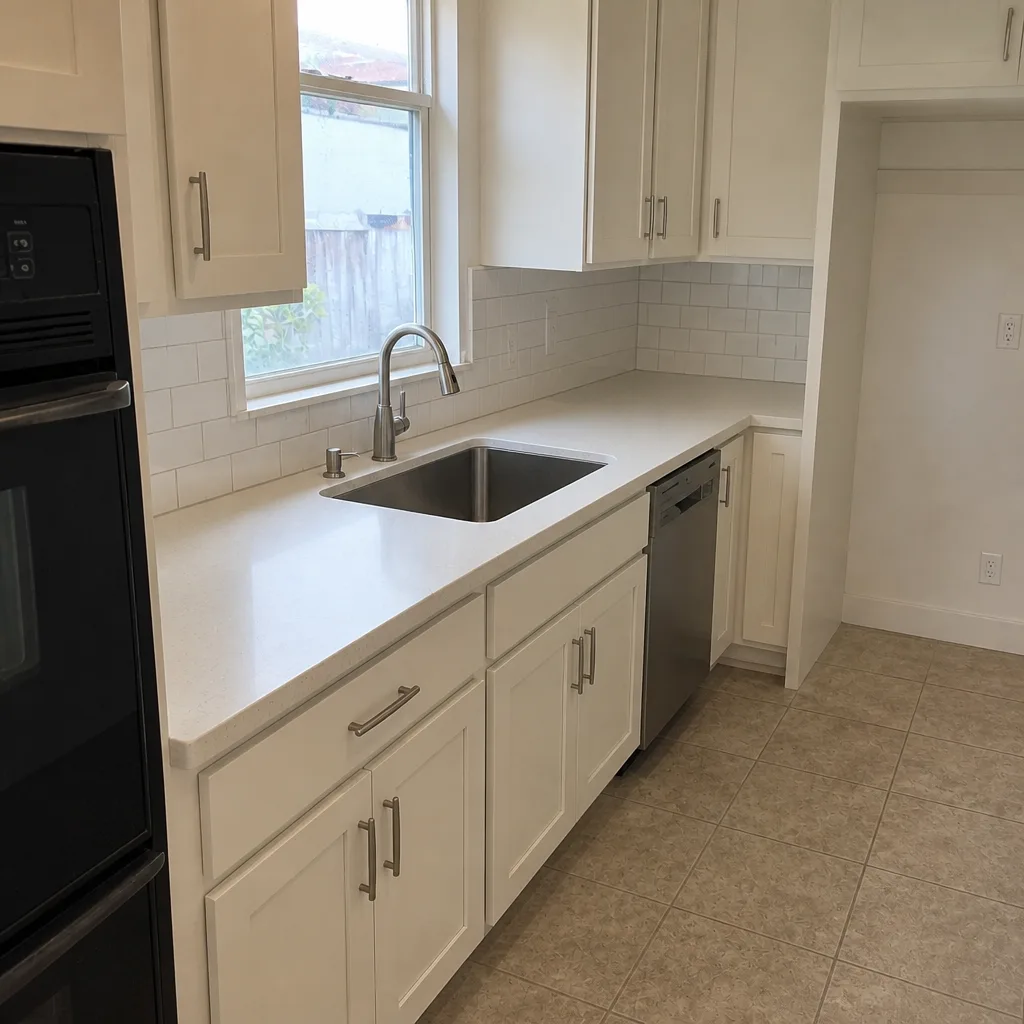
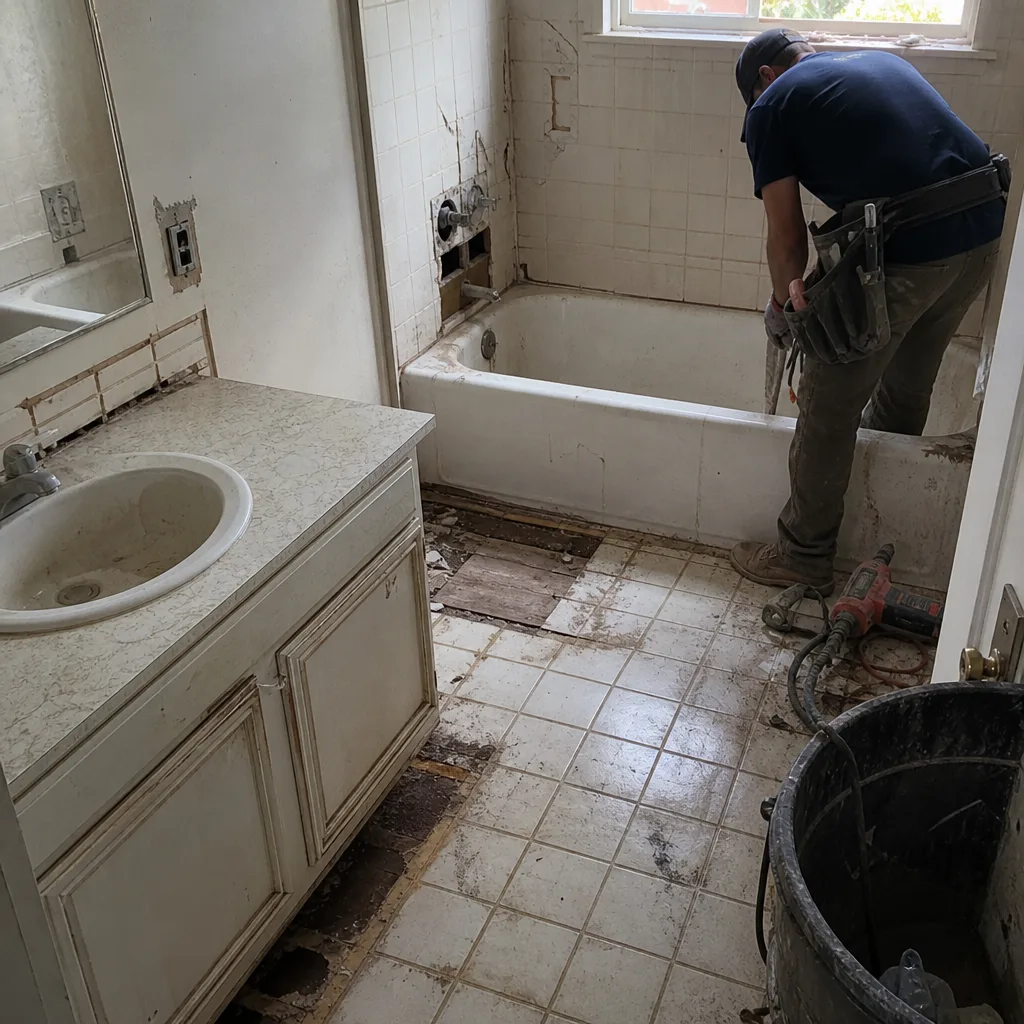
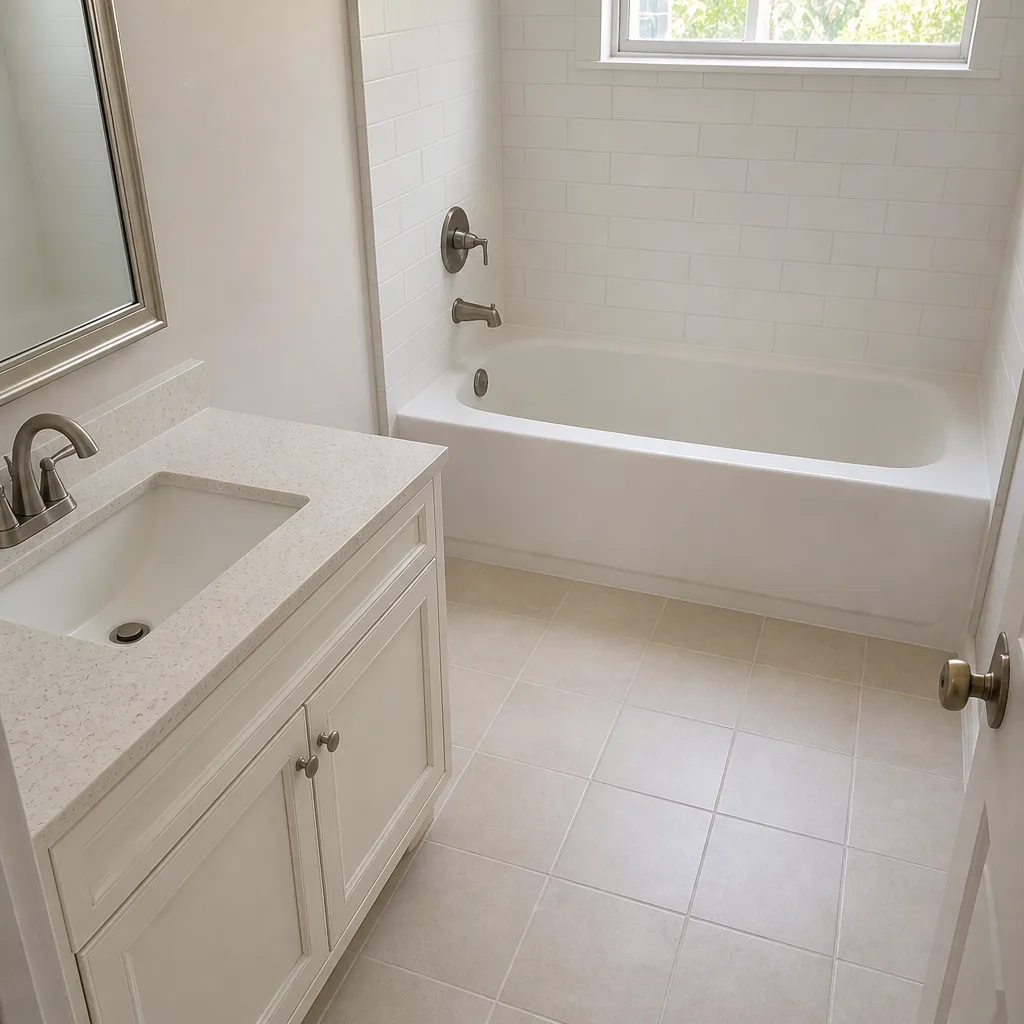
See the difference
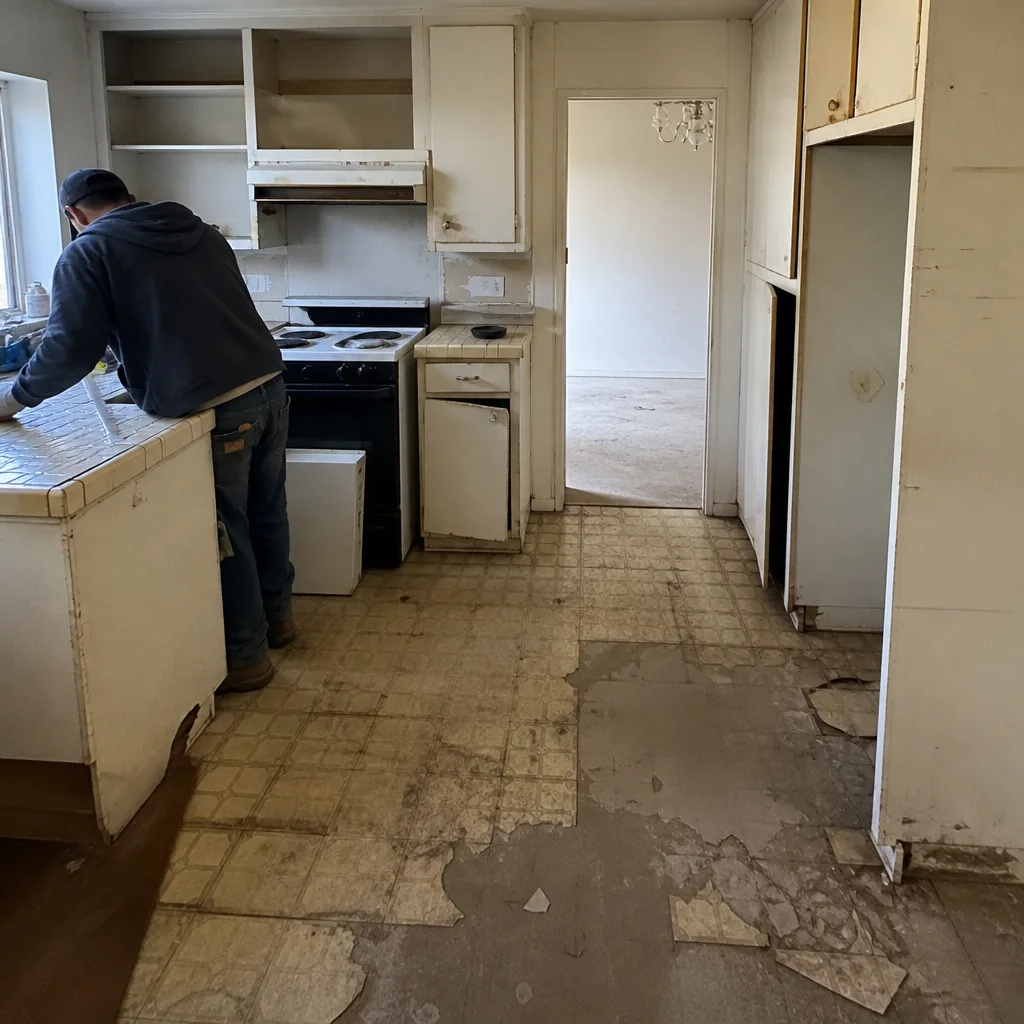 Before
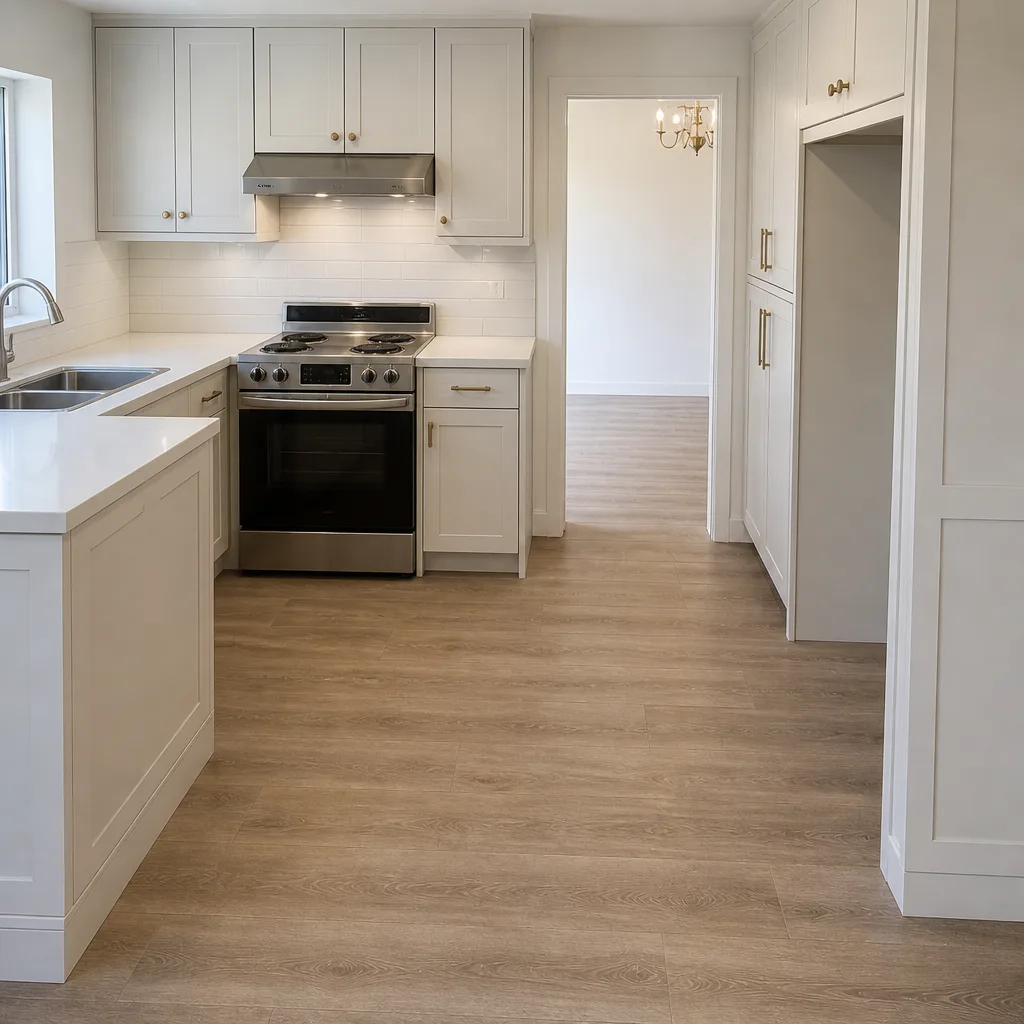 After
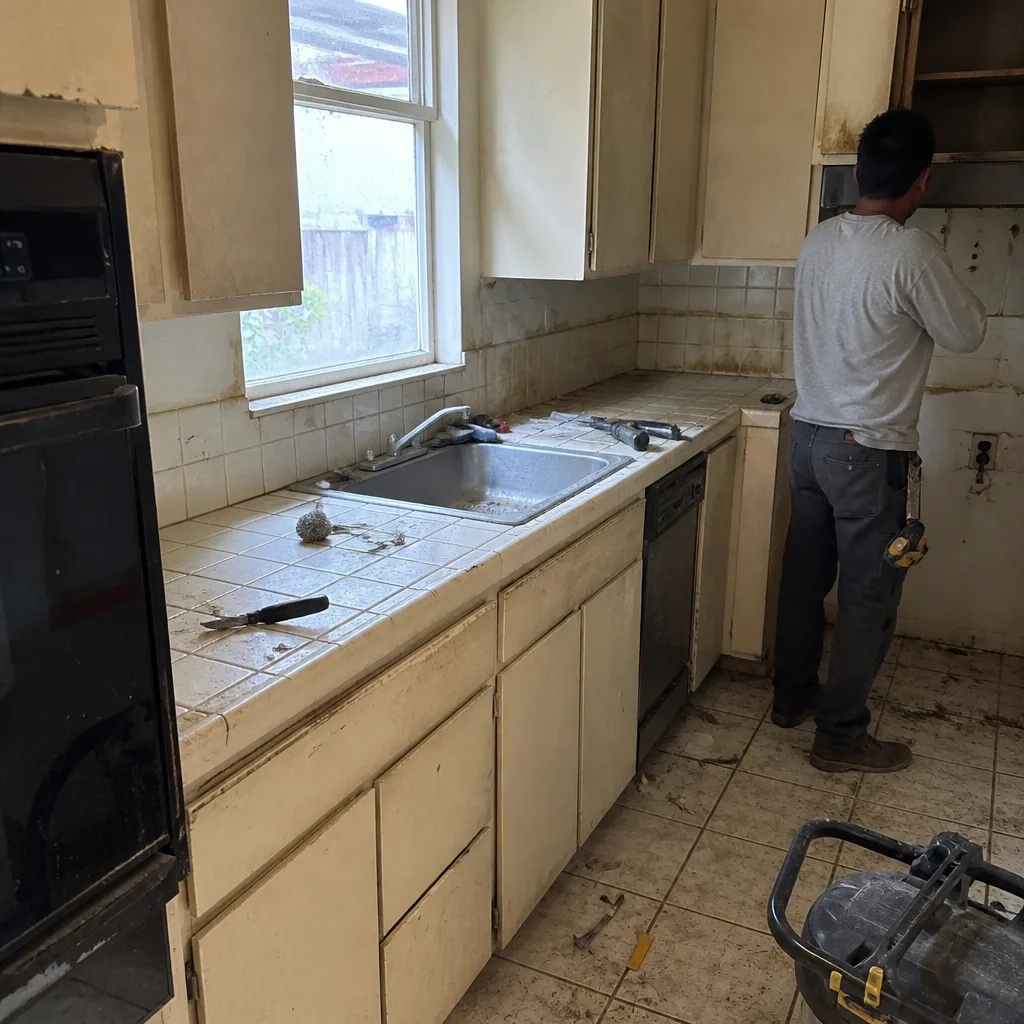 Before
 After
 Before
 After
When to Call a Professional
Some projects are clearly professional territory: any bathroom or kitchen remodel that involves moving plumbing or electrical, any home addition or ADU, any roof replacement with structural repair, any driveway or paver project with grading, and any fence installation where the footings or property line need to be right. These are the projects where the permit, the sequencing, and the inspection chain matter as much as the finish work.
The homeowner-side projects that can be done without a full contractor are smaller: repainting a room in good condition, replacing a vanity top and faucet without plumbing changes, refastening a gutter, swapping a light fixture on an existing circuit. When the scope creeps into two trades, or into anything structural, it’s time to call.
Construction Santa Clara offers free estimates in Santa Clara for homeowners planning single-trade projects and multi-trade coordinated work alike. Call (844) 435-8936 to schedule yours. We answer 24/7. Fast dispatch from 7am to 7pm, Sunday through Friday.
Frequently Asked Questions

Look up the contractor on the California State License Board website and confirm three things: the license is active, the classification matches the scope of work, and the business name on the license matches the name on the contract. A Class B license covers multi-trade residential projects, while Class C licenses are trade-specific. If the classification doesn’t match what you’re hiring for, the quote is outside their license.
Yes. California requires contractors who take on projects above a threshold amount, and who advertise as contractors, to hold a CSLB license. Working with an unlicensed contractor leaves you without recourse through the CSLB if something goes wrong, and it can also affect your homeowner’s insurance if a worker is hurt on your property. Verify the license before signing, not after.
Ask for a written subcontractor and supplier list before signing, and require signed lien waivers at each payment milestone. Mechanic’s liens in California can attach to your property even if you paid your general contractor in full, because the unpaid party is a subcontractor or supplier further down the chain. Lien waivers are the paperwork trail that proves everyone was paid. Requiring them is standard practice, not an unusual ask.
On most home improvement contracts, the down payment is capped at 10% of the contract price or $1,000, whichever is less. Beyond that, payments should be tied to performance milestones or inspections. If a contractor asks for more than the cap as an initial payment, that’s a signal to slow down and ask questions before you sign anything.
The contractor should pull the permits on any project with structural, plumbing, electrical, or gas work, and should be responsible for all inspections. Some cosmetic projects can be permitted under the homeowner’s name, but for anything structural, keeping the permit in the contractor’s name gives you protection through the inspection chain. Put it in the contract, not just in the conversation.
A single-trade project like a roof replacement or a fence installation typically runs days to a couple of weeks, depending on size and permit timing. A bathroom remodel often runs several weeks. A kitchen remodel or home addition runs longer, typically measured in months, because plan check, material lead times, and the inspection sequence all add calendar time. A written schedule with a substantial completion date is the single best thing to ask for so the timeline stays concrete.
The Bottom Line
Hiring a contractor in Santa Clara comes down to a handful of steps most homeowners skip because the license lookup feels like enough. It isn’t. Verify the classification, not just the number. Audit the subcontractor chain and require lien waivers at every milestone. Confirm in writing who pulls the permits. Insist on the five contract clauses that tie money to inspections rather than to calories burned on the calendar. Demand a site visit before the bid. And pay attention to how the contractor talks about materials, because the brands they can name tell you whether they’re building your project to spec or building whatever’s on the truck that week. Every one of these steps is free. None of them require an expert; they just require asking.
Construction Santa Clara handles projects from the driveway to the kitchen, coordinating trades and materials under one contractor. For a free estimate, call (844) 435-8936. We answer 24/7. Fast dispatch from 7am to 7pm, Sunday through Friday.
Written by the team at Construction Santa Clara.