Last updated November 18, 2026

Free written scope consultation - allowances, timeline, and change-order rules on paper before a single trade is scheduled
The Complete Driveway & Pavers Guide for Santa Clara Homeowners
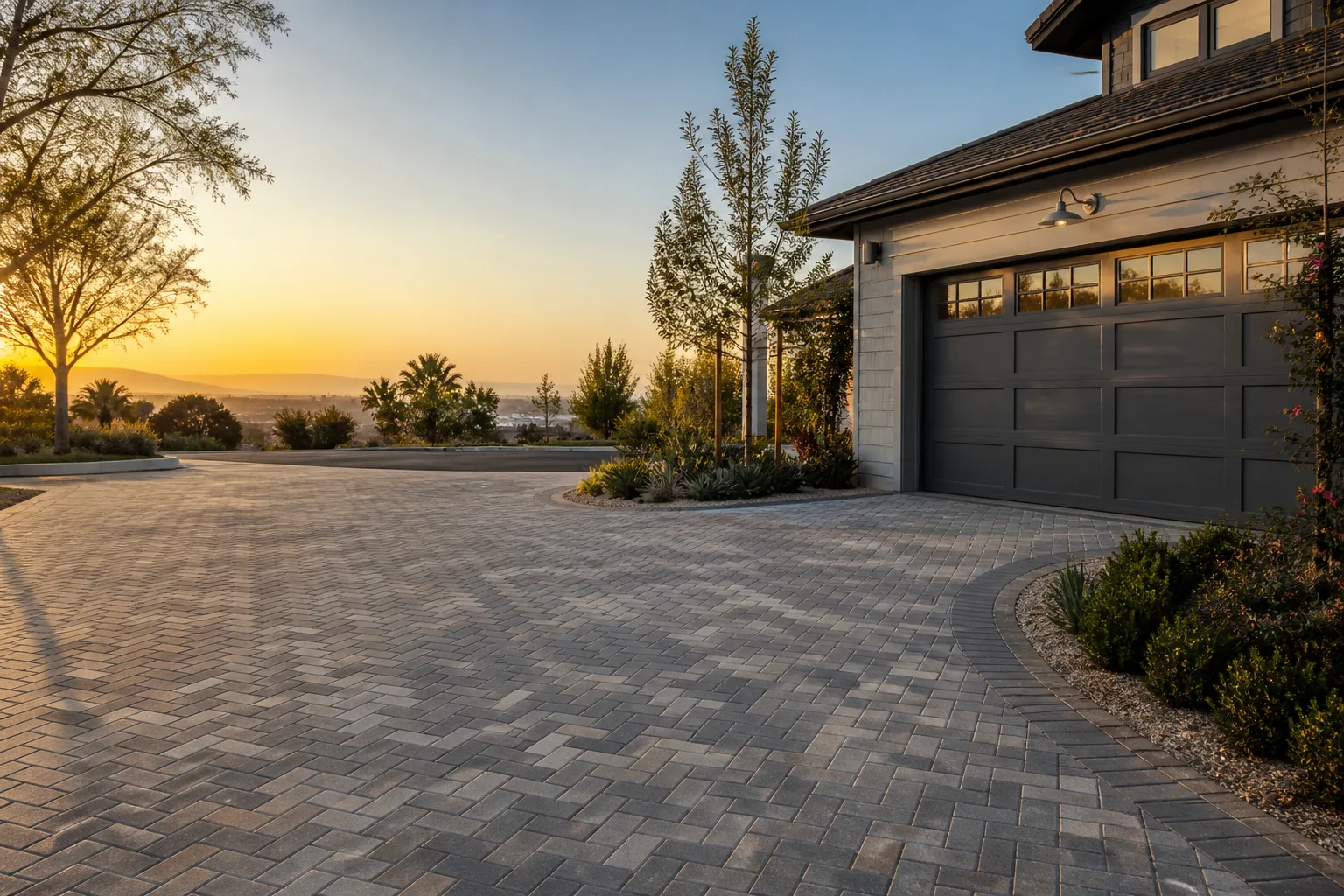
Most driveway paver failures in Northern California start six inches below the surface, not at the stone you can see. A paver can look flawless the day it’s laid and still be rocking underfoot two winters later, because the culprit is almost always the base, the soil, or the edge restraint, and none of those show up in a photo. Santa Clara makes this worse than most Bay Area cities because the ground here swells and shrinks with the seasons in a way that punishes shortcuts. This guide covers how we think about paver driveways from the ground up: soil, base depth, material choice for our drought-heat-rain cycles, seismic detailing, driveway sizing for modern vehicles, and the stormwater rules that apply in Santa Clara. By the end you’ll know what to ask a contractor and what a driveway that lasts is actually built on.
Quick Answer
A paver driveway in Santa Clara is a structural system, not a surface finish. The pavers themselves are the top inch or two; the base, subgrade preparation, and edge restraint underneath carry the load and decide whether the driveway holds up for decades or shifts within a few seasons. Get the base and drainage right and almost any quality paver will perform; skip them and even expensive stone will fail.
Styles & brands we work with
- Kitchen remodeling
- Bathroom remodeling
- Home additions & ADU
- Roofing
- Windows & doors
- Driveway & pavers
- Fence
Table of Contents
- Why the Base Matters More Than the Pavers
- How Santa Clara’s Clay Soils Change Base Depth Requirements
- Choosing Paver Materials for Bay Area Weather
- Seismic Detailing: Joint Sand and Edge Restraint
- Sizing Your Driveway for Modern Vehicles and EV Charging
- Stormwater Requirements and Permeable Pavers
- How a Paver Driveway Goes In, Step by Step
- What Affects the Cost of a Paver Driveway in Santa Clara
Why the Base Matters More Than the Pavers
Think of a paver driveway as a layered system. From the bottom up: native subgrade, a compacted aggregate base, a thin bedding layer, the pavers, and joint sand. The pavers resist abrasion and look good. Everything below them spreads the weight of vehicles across enough ground that no single point deflects. When that system is built correctly, the driveway flexes minutely with the soil and returns to level. When it isn’t, the pavers rock, sand washes out of the joints, edges spread, and you get the rutting and settling that send homeowners looking for repair.
What a properly built base does:
- Spreads load. A car’s weight arrives at four small contact patches. The base distributes that across a much larger area of soil.
- Drains water. Graded, compacted aggregate moves water away from the subgrade instead of trapping it.
- Absorbs minor soil movement. A flexible paver system tolerates small shifts better than a rigid slab, but only if the layers under it are consistent.
- Locks the pavers. Layer compaction, joint sand, and edge restraint together keep individual units from migrating.
In our experience across Santa Clara, the driveways that fail are rarely failing because the homeowner picked the wrong paver color. They fail because a base was too thin, was compacted in lifts that were too deep to compact properly, or was laid over soil that was never evaluated. That’s the part worth spending attention and budget on.
How Santa Clara’s Clay Soils Change Base Depth Requirements
Santa Clara sits on soils that include expansive clays, and expansive clay does one thing that matters to a driveway: it changes volume with moisture. In the wet season the clay takes on water and swells; through the dry months it shrinks. A driveway built directly on that movement, without a properly engineered base and drainage, will heave in places and settle in others. National paver base-depth tables usually assume stable, well-draining subgrade. On clay, those standard depths can be optimistic.
What that means in practice:
- Base depth goes up, not down. Where a generic guide might call for a set depth, clay subgrade often needs a deeper, well-graded aggregate base to bridge seasonal movement.
- Subgrade drainage is a design decision. Water that ponds under the base is what drives swelling. Grading and drainage need to be planned before any stone goes down.
- Geotextile separation fabric earns its keep. A separation layer between native soil and base aggregate stops clay fines from pumping up into the base and weakening it over time.
- Compaction is done in lifts. Base has to be placed and compacted in controlled layers, not dumped and rolled once.
- Soil evaluation first. A contractor who shows up and quotes a depth without looking at what’s under the driveway is guessing.
If you take one thing from this guide, take this: on Santa Clara clay, the depth and preparation of the base is the single biggest variable in how long the driveway lasts. It’s also the part you can’t see once the job is done, which is exactly why it’s the part to ask about before signing. Our driveway & pavers work is planned around the ground first and the finish second.
Choosing Paver Materials for Bay Area Weather
Santa Clara’s climate asks a lot of a driveway over a year: months of dry heat, a concentrated rainy season, and repeated wet-dry cycling. That pattern favors materials that hold color, resist staining, and don’t degrade with moisture. Here’s how the main options compare.
| Material | Best for | Watch out for |
|---|---|---|
| Concrete pavers (interlocking) | Durability, load capacity, wide color and texture range, easy single-unit replacement | Quality varies; choose engineered lines, not budget block |
| Permeable pavers | Sites with drainage or stormwater needs; open-graded joint and base system | Requires a properly designed open-graded base to function |
| Travertine / natural stone | High-end look, cooler surface underfoot | Needs sealing and careful base detailing; softer than concrete pavers |
| Clay brick pavers | Traditional look, strong color permanence | Susceptible to efflorescence; verify freeze and absorption ratings |
For most Santa Clara driveways, engineered concrete pavers are the practical sweet spot because the manufacturing is consistent and individual units can be lifted and reset if something shifts. When we specify pavers, we draw from established hardscape manufacturers – Belgard, Unilock, Techo-Bloc, Cambridge, Tremron, and Oldcastle – because those lines carry documented load and weather ratings and consistent sizing. Product lines from Tamko and Boral are also available depending on the design. The point isn’t the brand name; it’s that engineered product behaves predictably over the clay and heat cycles here in a way bargain block often doesn’t.
Seismic Detailing: Joint Sand and Edge Restraint
Santa Clara sits in a region where seismic movement is a real design consideration, and while no paver driveway is engineered as a seismic structure, a flexible paver system handles ground movement better than a rigid slab if it’s detailed correctly. Two details carry most of that job: joint sand and edge restraint.
Joint sand fills the gaps between pavers and locks them together as a mat. When the ground shifts slightly, a properly filled and compacted joint sand system lets the pavers move a fraction and resettle without individual units breaking loose. Polymeric or stabilized joint sand resists washout from rain and holds up better through dry cycles than plain sand. Edge restraint is the invisible border, usually a spiked or adhered edge, that keeps the outermost row from creeping outward under load. Without it, the field spreads, joints open, and failure starts at the perimeter.
What to confirm with your contractor:
- Joint sand is specified (polymeric or stabilized) and worked fully into every joint.
- Edge restraint runs along every exposed edge, including the garage apron and street transition.
- Drainage grading sheds water away from the house and off the driveway edges.
- The base is compacted in lifts and tested, not just eyeballed.
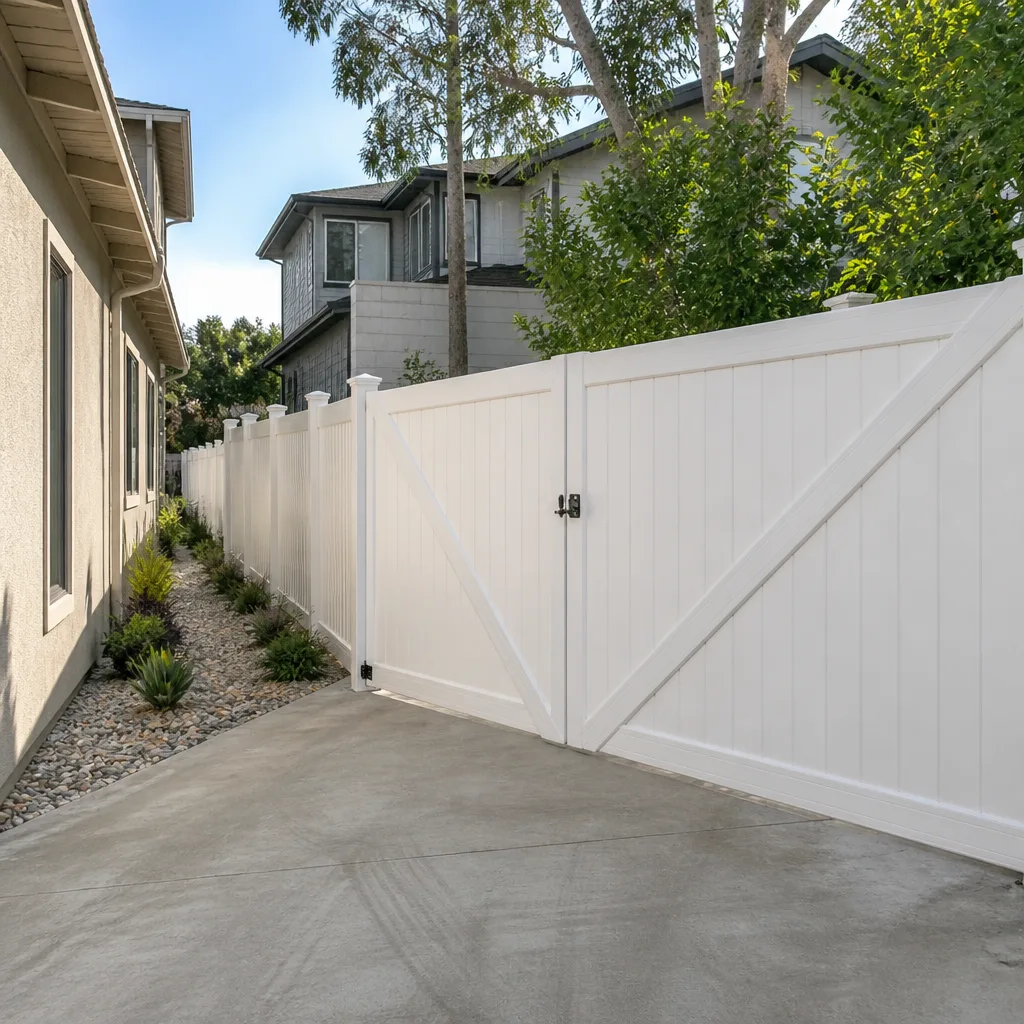
None of this is visible in a finished driveway, which is why it belongs in the conversation before work begins. Alongside the driveway itself, coordinating fence installation at the same time is worth considering so the whole hardscape reads as one finished exterior.
Sizing Your Driveway for Modern Vehicles and EV Charging
Driveways built decades ago were sized for cars that no longer exist. Modern vehicles are wider, heavier (especially EVs), and longer, and a driveway that was comfortable for a compact sedan can feel tight for a full-size SUV or a pickup. Getting the dimensions right up front avoids the daily frustration of door dings and a tight squeeze.
Plan around these practical points:
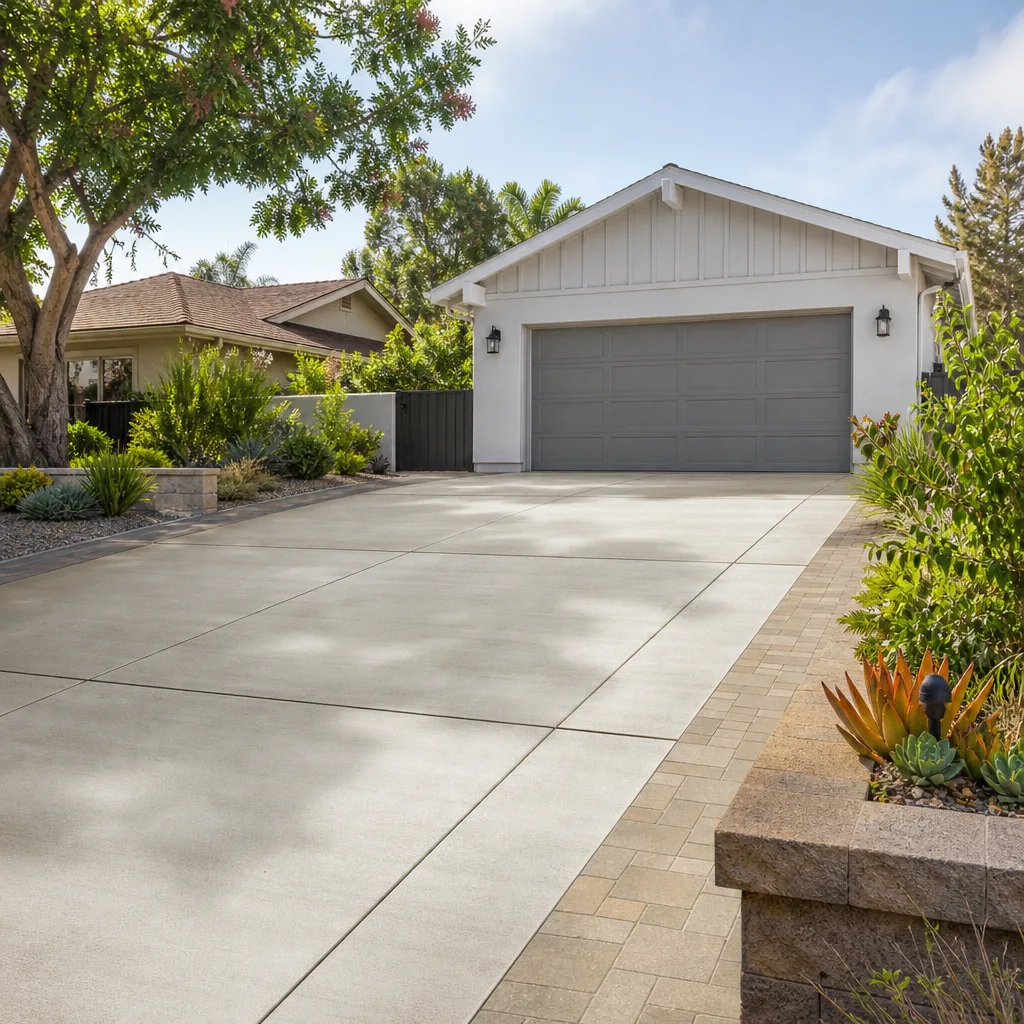
- Width for two cars side by side. Allow enough width for doors to open on both sides without stepping onto landscaping or a fence line.
- Turning radius. Make sure there’s room to back out and turn without clipping the street or a neighboring wall.
- Weight and base depth. EVs are heavier; heavier loads want a properly compacted, deeper base. Don’t undersize the base for the vehicle that will actually park there.
- EV charging pad placement. If you’re adding a charger, plan where the vehicle parks relative to the garage or pedestal, and where the conduit runs under the paving, before the driveway goes in.
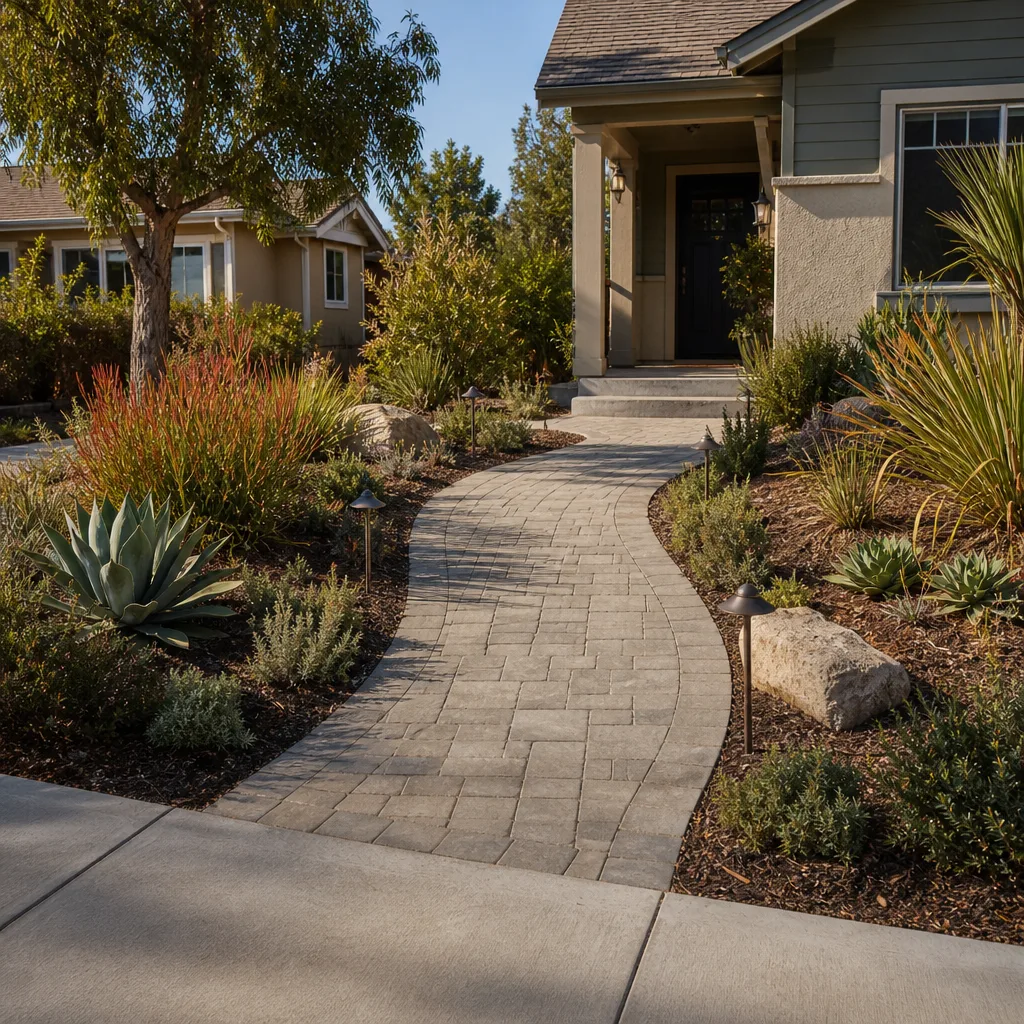
- Walkway connections. Decide how the driveway ties into the entrance walk and whether a paver border or apron ties the exterior together.
Getting sizing settled in the design phase costs nothing. Reworking a finished driveway does. If your plans extend to a garage conversion or an accessory unit using the driveway access, our home additions & ADU planning can be coordinated so the parking, access, and paving all work together. From the driveway to the kitchen, thinking about access and paving as one system saves money later.
Stormwater Requirements and Permeable Pavers
Santa Clara, like most of the Bay Area, cares about where rainwater goes. When it rains hard after a dry spell, hard surfaces send runoff into the street and storm drains rather than into the ground. That’s exactly why permeable pavers and other stormwater-conscious surfaces have become part of the conversation for driveways, and why some projects are encouraged or required to manage runoff on-site. The specifics depend on your property and the current requirements, so it’s worth asking your city’s planning or building department to confirm what applies to your lot before design is final.
How permeable pavers work, in broad strokes:
- The pavers have wider, open joints and often a modified profile, and the joints are filled with open-graded aggregate rather than tight sand.
- The base underneath is also open-graded, sized to store and slowly infiltrate water rather than shed it.
- Water reaches the soil below over time instead of flooding to the street during a downpour.
- They satisfy a functional need while also delivering a finished driveway surface.
The catch is that permeable pavers only work if the base and subsurface under them are designed for infiltration and the clay isn’t trapping water where it can do damage. Aligning the base depth with clay subgrade and the stormwater goal takes a real design, not a swap of one paver for another. Ask your contractor to explain the base system, not just the pavers.
How a Paver Driveway Goes In, Step by Step
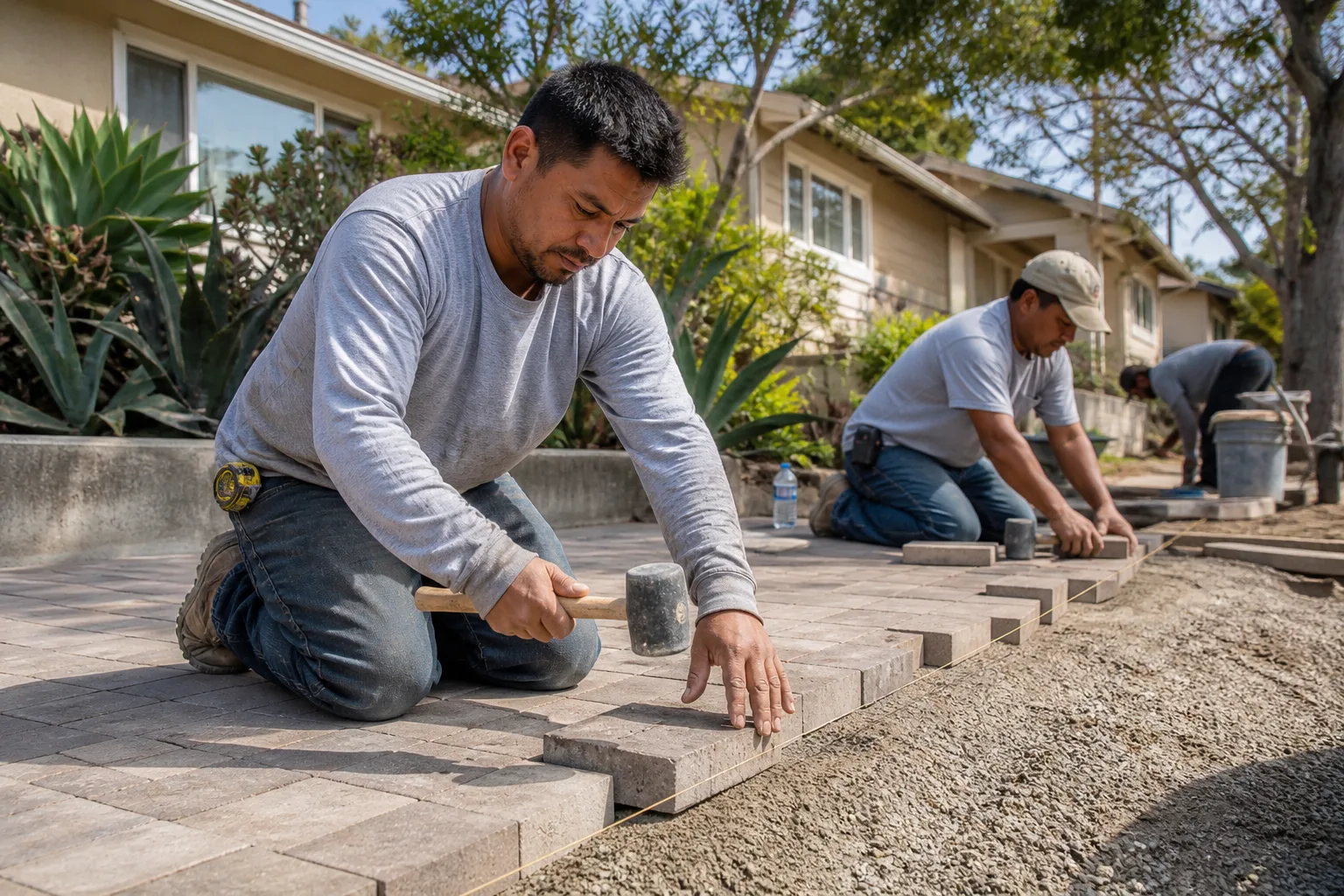
A well-built paver driveway follows a consistent sequence, and knowing it helps you ask the right questions. When we do paver driveway work in Santa Clara, the steps look like this:
- Site assessment. Evaluate native soil, existing drainage, slopes, and access, and confirm whether your project touches a right-of-way or stormwater requirement.
- Design and estimate. Size the driveway for real vehicles and plan the EV pad and drainage. You get a written, line-item estimate before any work starts.
- Excavation and subgrade prep. Remove existing surface, expose and grade subgrade, and correct any soft spots.
- Base installation. Place aggregate base in controlled lifts, compact and test, with geotextile separation on clay where it’s warranted.
- Bedding layer and screeding. A thin, consistent bedding layer is set to grade so the pavers sit level.
- Paver laying and cutting. Units are laid to the pattern and field cuts, with manufacturer-recommended pricing and measurement throughout.
- Edge restraint. Every exposed edge is locked with proper restraint fasteners or adhesive.
- Joint sand and compaction. Joint sand is installed, and the whole field is compacted so the pavers seat into the bedding layer.
- Clean up and final inspection. Debris removed, joints topped up where needed, and the finished surface checked against the plan.
The written estimate fixes the price for the scope agreed, which is why a clear step-by-step design before any work starts is the best way to keep a driveway project from drifting. Built to spec, not to guess.
What Affects the Cost of a Paver Driveway in Santa Clara
Every driveway is priced per job by a written estimate, because the cost depends heavily on site conditions you can only see in person. Rather than a flat square-foot number, here’s what actually moves the price:
- Base depth and soil prep. The deeper and more complex the base, the more excavation and aggregate it takes. This is the honest cost driver on clay.
- Existing surface removal. Removing and hauling away old concrete, asphalt, or pavers adds to scope.
- Paver material and pattern. Natural stone and premium engineered lines cost more than standard concrete pavers. Complex pattern cutting costs more than a simple running bond.
- Drainage and stormwater. Permeable systems or added drainage can affect the base design and cost.
- Sizing and access. Larger driveways, tight access, and cut-and-fill all factor in.
We give a written, line-item estimate, so you can see what you’re paying for and compare the same scope across bids. A free estimate is the right place to start, and it’s the only place to get a trustworthy number.
Common Mistakes to Avoid
- Quoting off square footage alone. A bid based only on area and ignored soil is a bid that can’t price the risk. Insist on base depth and drainage being part of the estimate.
- Too-shallow base on clay. National depth tables don’t account for Santa Clara’s expansive clay. Deeper base and proper drainage are the fix.
- Skipping edge restraint. No restraint means the perimeter spreads and joints open. Every exposed edge needs it.
- Burying drainage problems. If water ponds under the base, it swells the clay and heaves the pavers. Grade it away and plan drainage before paving.
- Ignoring EV load and pad placement. A driveway sized and built for a sedan won’t serve a heavier EV or a future charger. Plan for the vehicles that will actually park there.
- Cheap joint sand. Plain sand washes out through dry-rain cycles. Stabilized or polymeric sand holds up.
- Not confirming stormwater rules. Requirements vary by property. Ask your city’s building department before the design is locked rather than after.
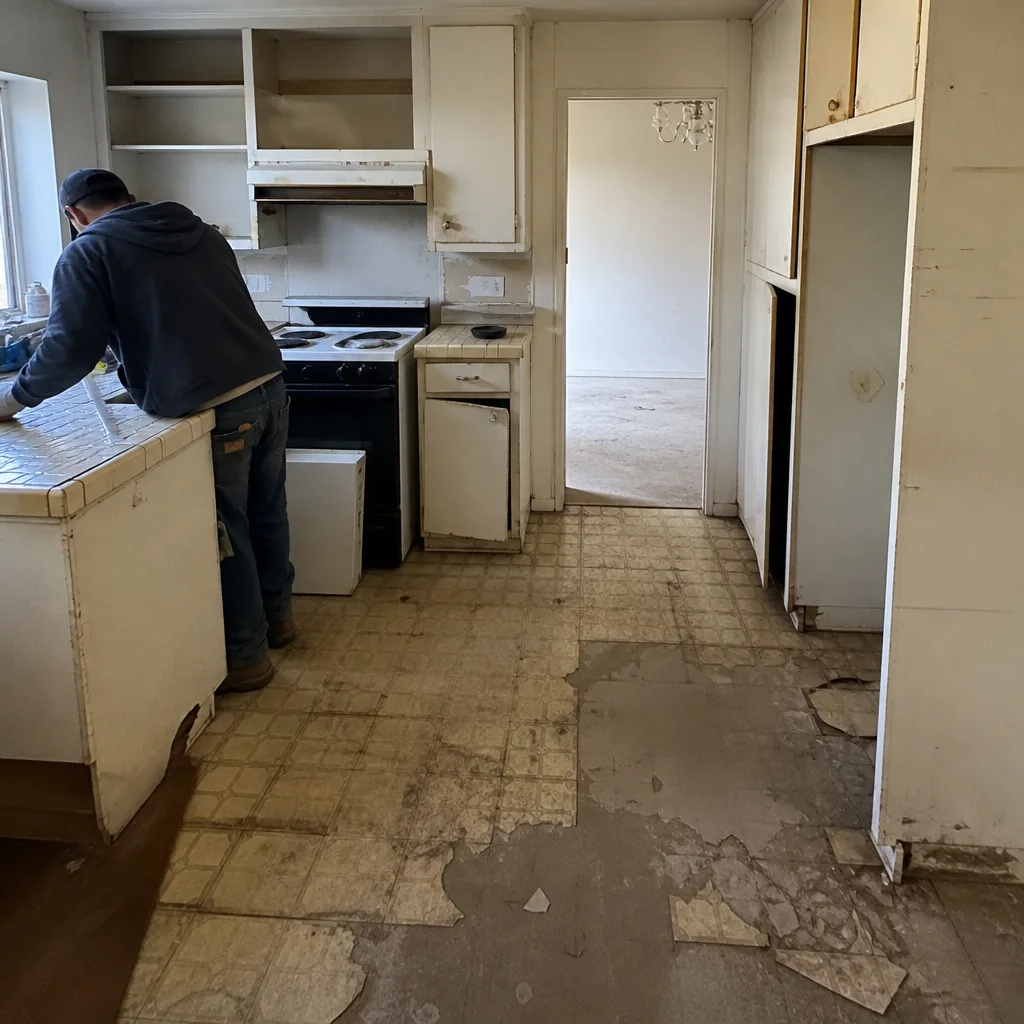
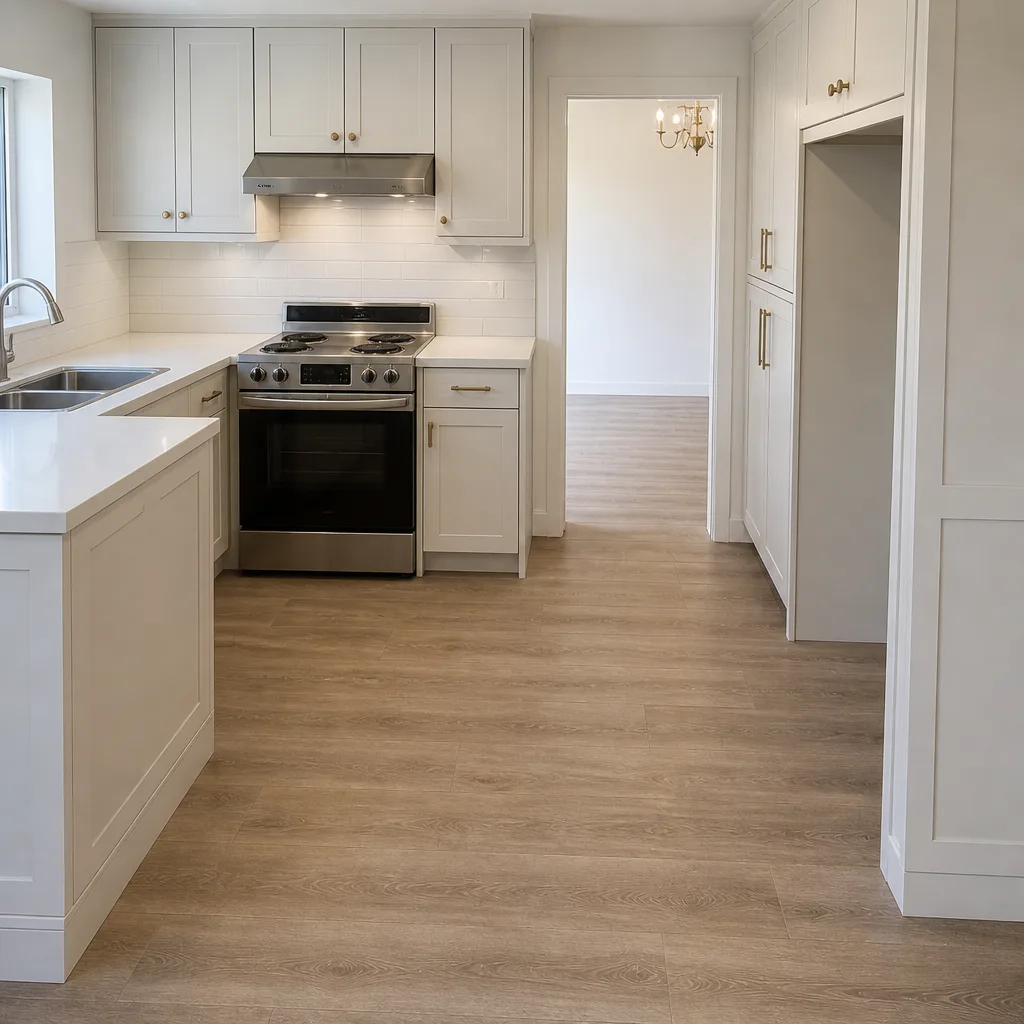
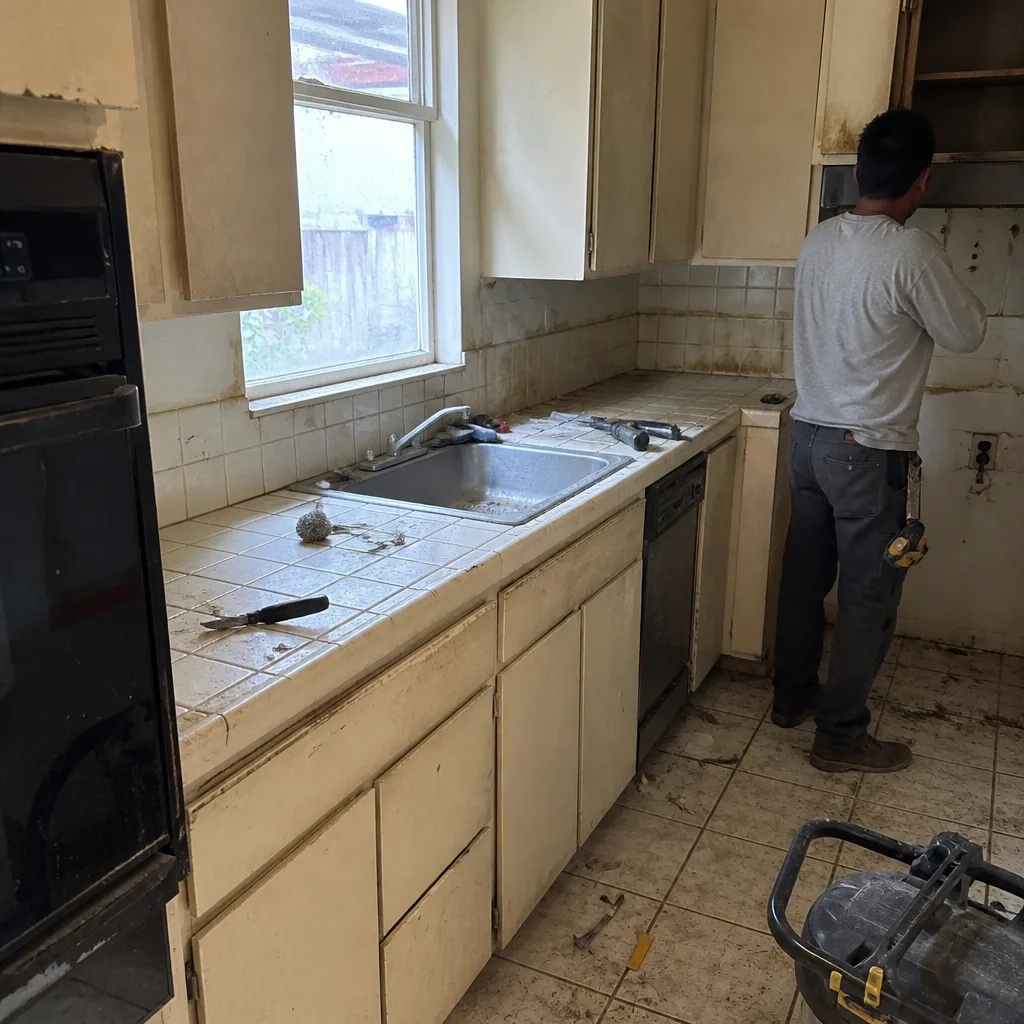
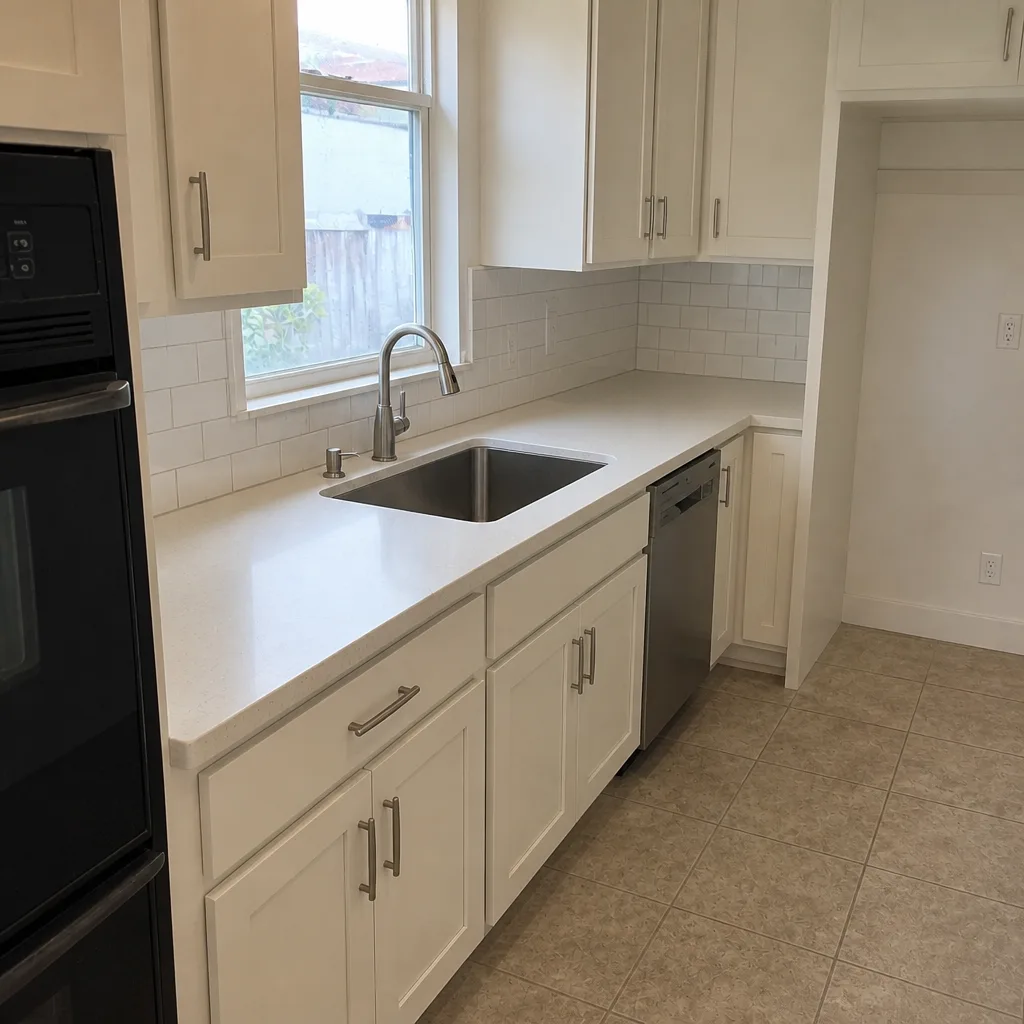
See the difference
 Before
 After
 Before
 After
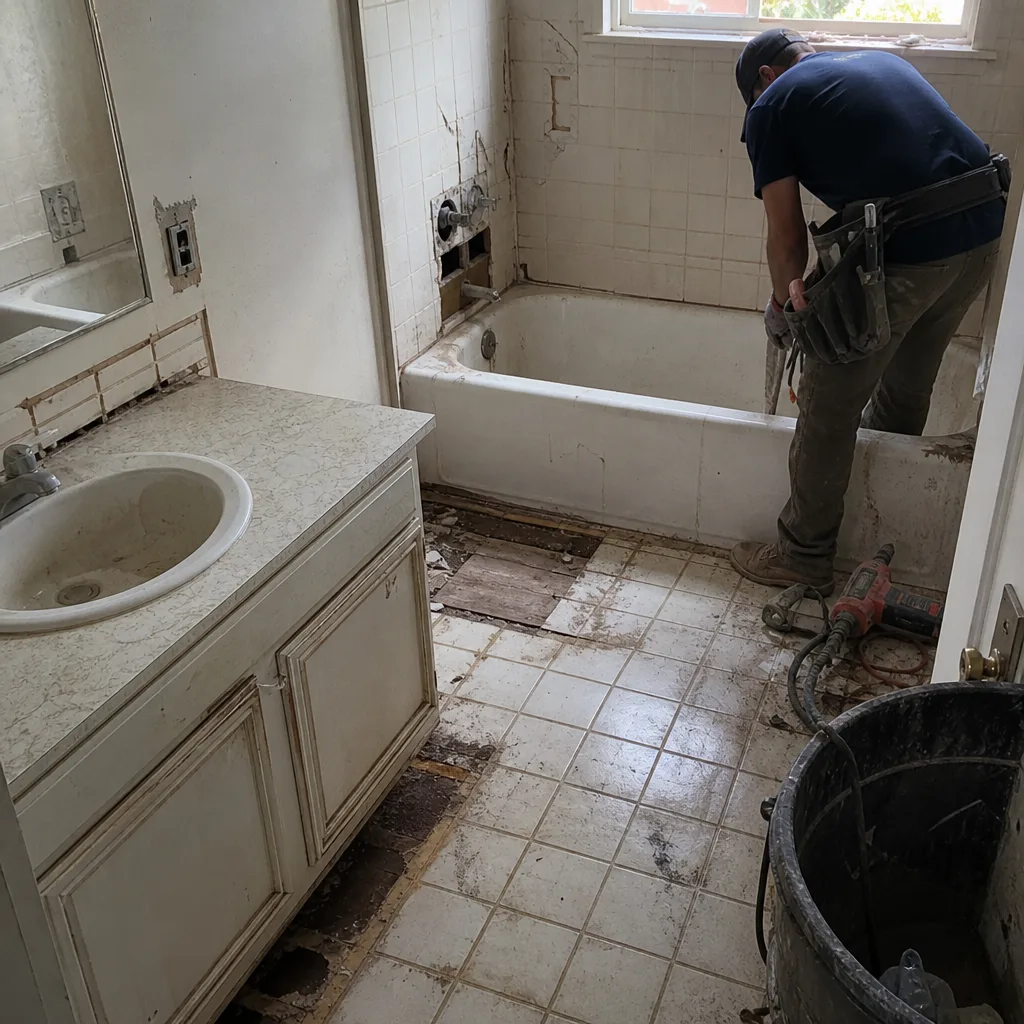 Before
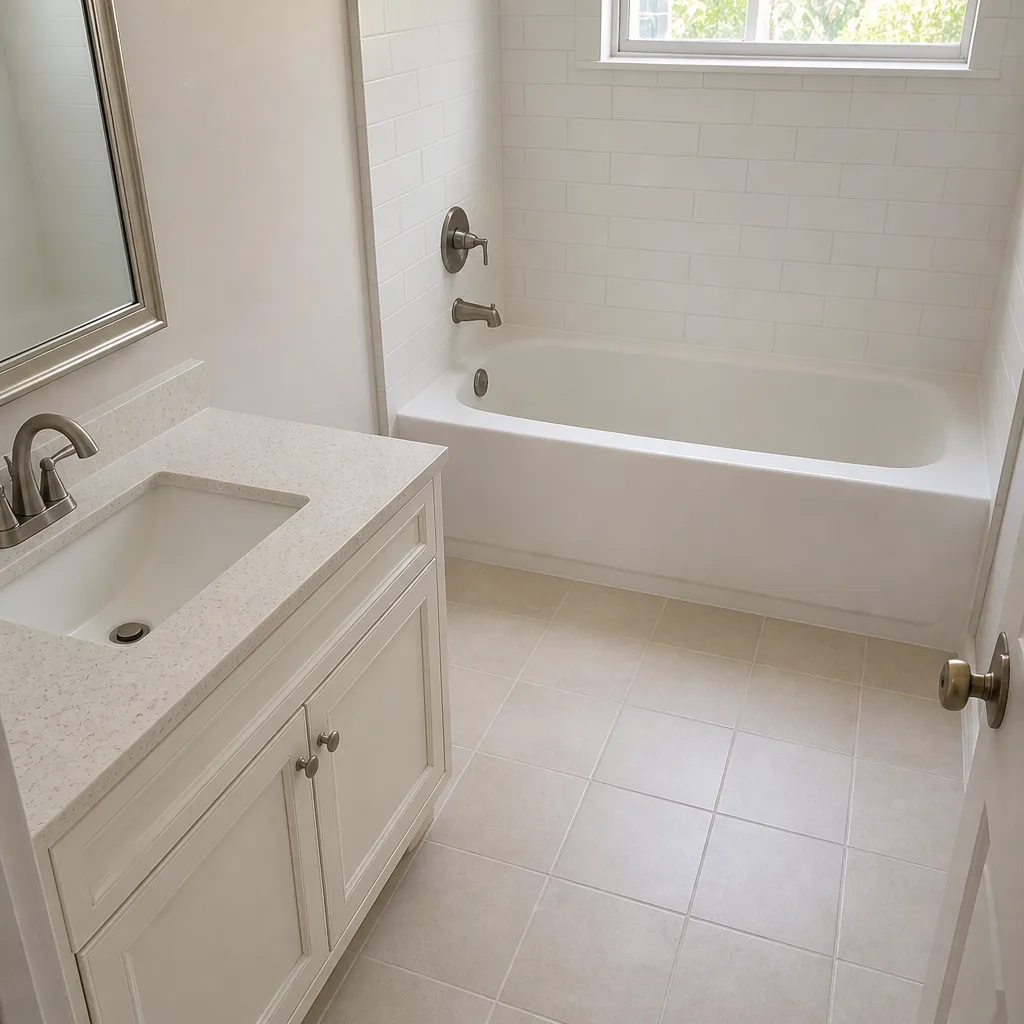 After
When to Call a Professional
Some cleaning and minor repairs are safe to handle yourself. The ground and drainage side of the work, however, is not a good candidate for weekend DIY. If your existing driveway has settled or heaved, if pavers are rocking or shifting, if you’re planning an EV charger or garage conversion around the driveway, if water ponds or drains toward the house, or if you’re starting a new build and want the base and stormwater handled correctly the first time, it’s time to bring in a contractor. Getting the base, soil evaluation, and design right is what keeps a driveway out of the “repair next spring” cycle. Construction Santa Clara offers free estimates in Santa Clara – call (844) 435-8936 to schedule yours.
Frequently Asked Questions
There’s no single number that’s right for every site, because the correct base depth depends on soil, load, and drainage. On Santa Clara’s expansive clay, you should expect a deeper, more carefully graded aggregate base than a generic national table would suggest, plus proper subgrade drainage and often a separation layer. Ask your contractor to explain the base design for your specific property before work starts.
Yes, when the site is designed for them. Permeable pavers can help manage stormwater from a large hard surface and reduce runoff, and they deliver a real driveway at the same time. The base underneath must be open-graded and appropriate for the soil, so the design matters more than the paver. Confirm current City of Santa Clara stormwater requirements for your lot with the planning or building department first.
Engineered concrete pavers hold up very well, and premium lines specifically carry documented load and weather ratings. Natural stone and clay brick both work with the right base and sealing, but they demand more careful detailing. The honest answer is that the base and joint system matter more than the surface material for longevity – choose the paver you like, and invest in the base the ground actually needs.
A flexible paver system handles minor ground movement better than a rigid concrete slab, and proper joint sand and edge restraint are what let it move slightly and resettle. It’s not a substitute for structural engineering, but the detailing is exactly why edge restraint and stabilized joint sand belong in every job. If you’re concerned about seismic movement on your property, raise it with your contractor so the design can account for it.
Cost depends on base depth, existing surface removal, material, pattern, and drainage, so we price each driveway per job from a written, line-item estimate. That’s the only reliable way to price clay-soil work. Call (844) 435-8936 for a free estimate in Santa Clara – estimates are free and there’s no pressure to book.
Many driveway projects, especially ones that change drainage, touch a right-of-way, or add permeable surfaces, may need a permit or at least a conversation with the city. Requirements depend on your property and scope, so confirm with the City of Santa Clara building or planning department before design is final. Your contractor should be able to walk you through what applies to your job.
The Bottom Line
A paver driveway is a structural system, and in Santa Clara the ground beneath it is where the outcome is decided. Clay soils and seismic movement reward a deeper, well-compacted base, proper drainage, geotextile separation where needed, and edge restraint with stabilized joint sand. Choose a paver you like, but invest in the base the ground actually requires, size the driveway for real vehicles and EV charging, and confirm stormwater requirements early. Get those right and the pavers you see are only the top layer of a driveway that will hold up for years. From the driveway to the kitchen, one contractor can carry the whole exterior-to-interior project – windows, fencing, roofing, and remodeling – and our teams have up to 13 years of experience to draw on.
Ready to plan your driveway on the ground it actually sits on? Call (844) 435-8936 for a free estimate. We answer 24/7. Fast dispatch from 7am to 7pm, Sunday through Friday. Our technicians have up to 13 years of experience, and we work with brands like Belgard, Unilock, Techo-Bloc, and Cambridge to match the right paver and base system to your property. Explore more of our work at Construction Santa Clara.
Written by the team at Construction Santa Clara.